
One Hundred Shadows
by Hwang Jungeun
translated by Jung Yewon
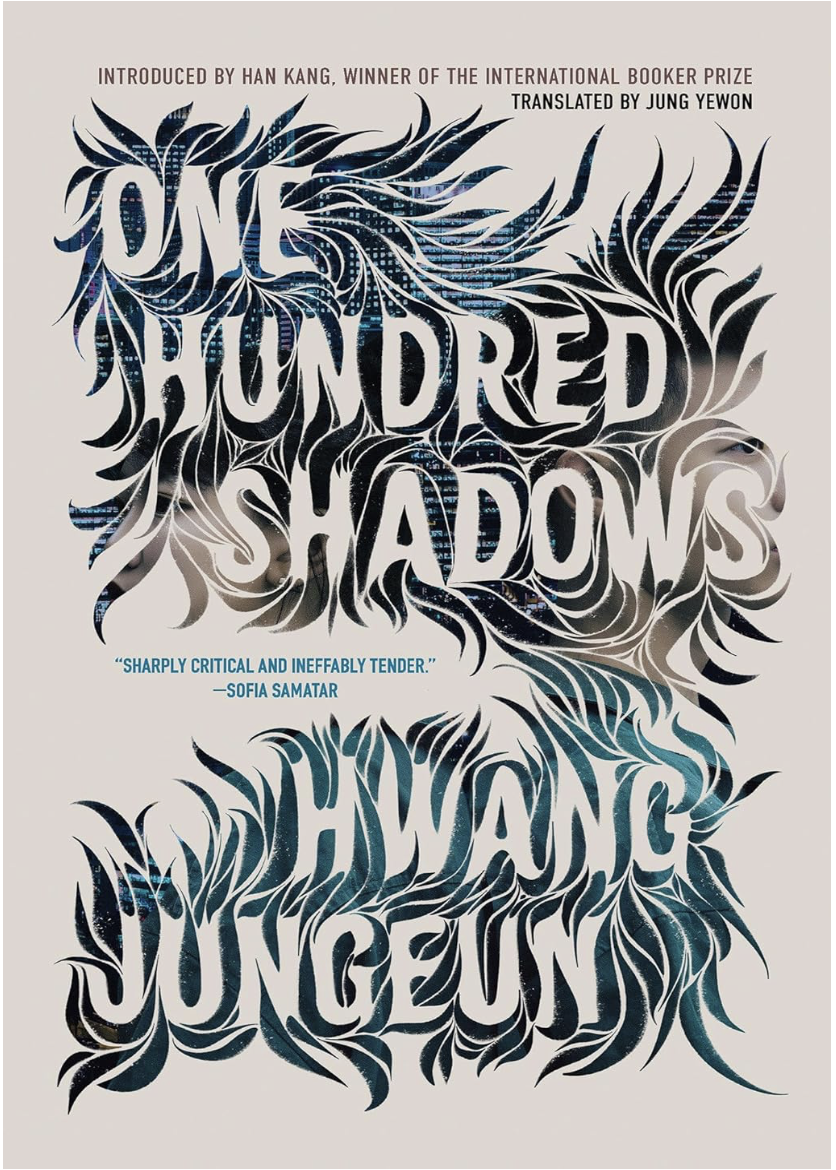
Where to purchase: Bookshop.org | Amazon | Bookoutlet
This post contains affiliate links. If you purchase through my links I may earn a small commission at no extra cost to you. Thank you for supporting My Asian Era.
This book is less than 200 pages. I read it between flights during my recent travels.
What It's About
In the heart of Seoul, in an aging electronics market that the city has decided it no longer needs, two young people are slowly finding each other. Eungyo repairs appliances. Mujae works a floor below. They are both school dropouts, both with their heads down trying to get through lives they did not choose. The building they work in is slated for demolition. The community around them is slowly disappearing.
And the shadows have started to rise.
The shadows of people in the market are detaching themselves and wandering. Everyone who knows about it says the same thing: don't follow your shadow if it rises. Don't follow, even if it calls you.
What Stuck With Me
This is a quiet book. I mean that as high praise.
Eungyo and Mujae are not dramatic people. They eat cheap noodles together. They walk. They talk in the careful, circling way of two people who are drawn to each other but have learned not to reach for things. Mujae tells Eungyo about a boy, really about himself, who inherited his father's debt and then took on more debt just to survive, so that by the time he might want to build something of his own there is nothing left to build with. He is telling her why he cannot offer her what she might want. He does it with such matter-of-fact sadness that you feel the whole weight of a life in it.
Sometimes when I read these books, I wonder what the author knows, maybe as part of their culture or as part of something they’ve researched that they are weaving into or even basing their stories on. I was curious if the rising shadows had some special meaning. Across many traditions, including Korean shamanic belief, a person's shadow has long been understood as connected to their vital force, their soul. To lose your shadow, or to have it wander, was to lose something essential about yourself. Hwang is not writing folklore, but she is drawing from that deep well. When the shadows of the market's residents begin to rise, it does not read as fantasy. It reads as spiritual fact. These are people whose lives are being erased, and their shadows are simply doing what their circumstances have already done to them.
I wanted to know what Korean readers thought about the book and found that Korean readers and critics debated what the rising shadows represented. The most resonant answer, which came out of Korean book clubs, was this: depression, listlessness, passivity, the accumulated weight of everything the city grinds into people it has no room for. Some said han. One reader described it as the desolation that urban life inflicts, following a person like a shadow. A Korean literary critic described this novel as simultaneously a love story, a fantasy novel, and an ethical one, a book that looks for a long time at the empty spaces left by things that have disappeared, and bears witness that they existed.
I think it is all of those things, especially that last part. The market is not just a setting. It is a place that was someone's life, and the novel refuses to let you forget that.
There is a moment while reading this where you start to wonder: are these people already gone? Are Eungyo and Mujae among the living or among the shadows? Hwang never answers that directly. She doesn't need to. It is something you have to decide for yourself.
The Writing
Hwang Jungeun's prose has been so distinctively her own that Korean critics coined the terms Hwang Jungeun-style and Hwang Jungeun-esque after this debut novel. The dialogue is spare and repetitive in a way that sounds strange but feels completely right on these pages. Characters confirm things back to each other. They circle. They leave space. It is the way people talk when they are being very careful with each other, and it gives the novel a rhythm that is almost hypnotic.
Jung Yewon's translation carries all of it. The dry, unemotional tone of the writing is not a weakness or a stylistic accident. The flatness is what creates the melancholy, the intimacy, the sense of lives being quietly erased. Without it the book would not be itself.
Would I Recommend It
Yes, especially if you are the kind of reader who is comfortable with a book that leaves things unresolved and unexplained. This is not a plot-driven novel. It is a mood, a place, a relationship, and a question. It is less than 200 pages and it will stay with you longer than books three times its length.
My Takeaway
The city decided this market, these people, these lives did not fit into its future. Hwang Jungeun wrote this novel to say: they were here. They were real. Don't follow your shadow. But don't forget it either.
Where to purchase
Bookshop.org | Amazon | Bookoutlet
This post contains affiliate links. If you purchase through my links I may earn a small commission at no extra cost to you. Thank you for supporting My Asian Era.
If You Liked
After Dark by Haruki Murakami, nocturnal, intimate, two young people trying to hold onto something in a city that moves too fast to notice them.
But honestly, One Hundred Shadows is its own thing. There is nothing quite like it.
