
Fruit of Life
Poetry That Didn't Feel a Century Away
by Kim Myeong-sun
translated by Eunice Lee
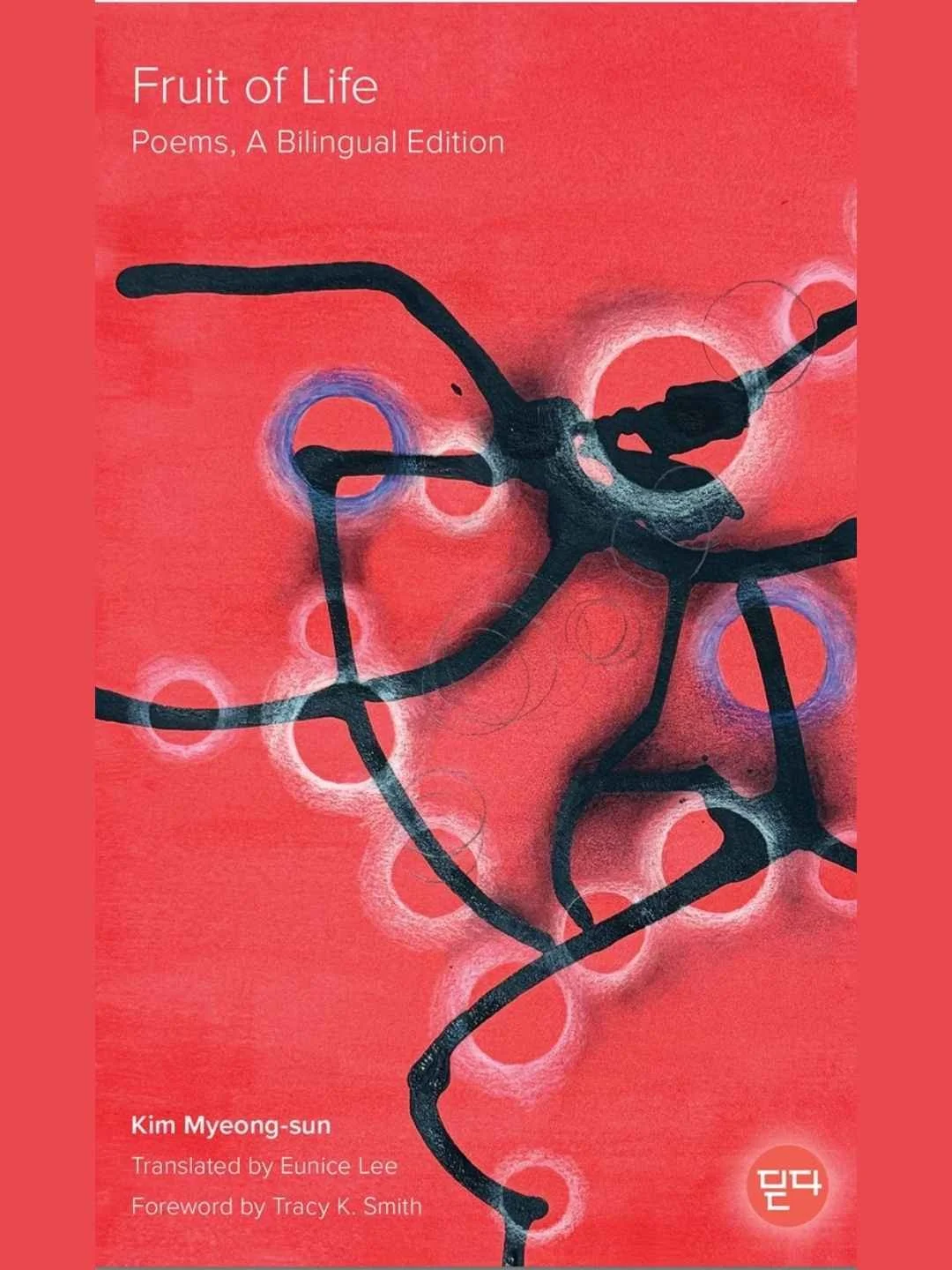
ARC REVIEW
Fruit of Life: Poems, A Bilingual Edition
By Kim Myeong-sun
Translated by Eunice Lee
Foreword by Tracy K. Smith
Rutgers University Press | September 8, 2026
I expected Fruit of Life to feel older than it did.
Kim Myeong-sun was writing more than a century ago, and I went into this collection expecting there might be some distance I would have to work through. Older language, unfamiliar references, poetry that might take a few readings before I understood what it was trying to say.
That distance never really appeared. I heard her almost immediately.
I heard her longing, her love, her sadness and her pain. I heard the young girl she had been, the daughter missing her mother, the woman waiting for someone she loved, and the woman looking at the expectations placed on women around her and refusing to pretend they were harmless.
In “The Middle - Heavenly Song,” there is one line that felt like it summed everything up:
“Loneliness was my life.”
By the time I finished, I could hear that loneliness everywhere. In the poems about her mother, in being away from home, and in all that waiting and hoping for someone who never came.
Meeting Kim Myeong-sun
Kim Myeong-sun is recognized as Korea's first published woman writer, and her 1925 collection Fruit of Life was the first published volume of Korean poetry by a woman. This new bilingual edition is broader than that original collection. Translated by poet and scholar Eunice Lee, it brings together poems from Fruit of Life, work from the later Lover's Gift, and uncollected poems from across Kim's writing life. It is the first book-length Korean-to-English translation of her poetry and includes a foreword by Tracy K. Smith.
The foreword, preface and translator's material gave me Kim's history and explained the world around her. They also gave me the history of her work and its translation.
Kim spent part of her youth studying in Japan, and that changed the way I read the moments when she calls out toward her Chosŏn people. I could hear the distance from home much more clearly after that.
A Voice That Felt Surprisingly Close
There are poems about Kim's childhood that I loved.
In the section labeled “Half of My Life is Verse / The Beginning / Childhood,” she remembers being the excellent student whose classmates copied from her, while their parents came asking her family for money. Then she writes:
“I was excellent at studying and crying.”
That sentence is sad, but there is bite in it too. She can be funny and cutting even when she is talking about something painful. She talks about suffering almost as if endurance became another thing she learned to be good at.
That sharpness is part of her voice. Kim can also be tender, angry, lonely and romantic. There is much more personality here than the story of a tragic woman writing tragic poetry.
I especially loved “Voices I Hear,” and I loved the poems about her and her mother, particularly the ones remembering when she was young.
Her mother is already dead in many of the poems, and you can hear the pain in those too. But one small memory is different. Her mother asks her giddy child when she is ever going to sleep, and the child answers that it is her light making the whole world shine.
That little exchange got me. For just a moment, before all the grief that came later, she is a bright little girl talking to her mother.
Longing, Women and the Blue Butterfly
Longing may be the emotion I heard most clearly throughout Fruit of Life.
She is constantly waiting and hoping. There are poems connected to the Blue Butterfly that read to me as longing for someone Kim loves and keeps waiting for who never comes.
I don't want to put a modern identity onto Kim from a century away, but the longing itself is there. So is the love and the sadness when that love goes unanswered.
There is so much yearning in these poems. Even when there is hope, there is often an ache underneath it.
The edition moves through different periods of Kim's poetry, and those feelings keep appearing. Her subjects change, but the loneliness never goes away.
The Women Around Her
There is a feminist current running through the collection too, although it is only one part of what Kim is writing about.
She writes about Chosŏn teaching “the wife's way” to seven-year-old girls. Barely grown, they receive their sentence. Tradition is harsh, obedience is expected, and women are taught what their lives will be before they are old enough to understand what is being asked of them.
Then there is the girl married at twelve.
She leaves home in a sedan with her eyes closed, crying hard enough to smudge her rouged and powdered face. The flower crown on her head frightens her with its weight.
Later she is sixteen, already a widow, walking behind a funeral bier for a husband who had mostly been her husband in name.
I was quietly crushed by those images, especially that flower crown. She is twelve years old and already carrying the weight of everything expected of her.
Kim's work has been studied within the history of Korea's early “New Women,” educated women whose lives and writing challenged established ideas about gender, marriage and women's place in society. Scholarship has also looked at the way Korea's literary culture treated Kim herself.
That history made some of the poems sharper for me, but it wasn't how I first connected with her. I heard the woman before I started thinking about the label.
Eunice Lee's Translation
I don't read Korean, so I can't tell you how closely Eunice Lee's English reflects every choice in Kim Myeong-sun's original language. I would never pretend that I can.
What I can talk about is how the English felt to me.
It was very poetic, but it was also clear enough that I understood what Kim was saying on the first read.
I've read other poetry in translation where the language itself takes much more time to work through. Sometimes I have to reread a poem a few times before I even understand what it is getting at. That wasn't the case here.
I could feel the poem first, then go back and notice more of what Kim was doing.
I started learning her rhythms and her patterns. In “Drizzling Rain,” she repeats the simple phrase “Drizzle, drizzle.”After a while those repetitions became something I recognized in her writing.
A Bilingual Edition That Helps Rather Than Intimidates
The edition is bilingual, with the English poems in the first half and the Korean in the second.
Most of what helped me came from the introduction, translator's material and footnotes.
There were place names I didn't know, and sometimes I wasn't sure whether I was missing another meaning behind the location itself. The footnotes were enough, though. I never felt like I needed another book open beside me just to understand what I was reading.
I really enjoyed all of the additional material. It explained her history, the times around her and even something of her heart without turning the poems into homework.
Who Should Read Fruit of Life?
I would especially recommend this to people who love poetry in translation and, even more specifically, women's poetry in translation.
It is also for readers interested in Korean literature, early twentieth-century women's writing, Korean literary history and poetry about loneliness, mothers, love, desire and displacement. There is plenty here for readers interested in feminist or queer literary history too.
I really loved these poems. I heard her longing, her love, her sadness and her pain, and I am so glad I had the opportunity to read them.
More than a hundred years separate me from Kim Myeong-sun, yet I finished Fruit of Life feeling like I had heard her clearly. The history helped me understand the world she was writing from. What I will remember is her.
Definitely worth the read.
I received an advance digital copy of Fruit of Life through Edelweiss from Rutgers University Press. Opinions are my own.
This post may contain affiliate links. If you purchase through one of these links, I may earn a small commission at no additional cost to you.
Where to Purchase
If you like this you may like
Lady No - Fierce, surreal feminist poetry that is much more confrontational
Winter Night White Rabbit - Quiet, strange poems shaped by loneliness, memory and small emotional shifts.
The Summer’s End - Tender, melancholy poetry about love, absence and the ache that lingers after something ends.
