
Yoko Tawada
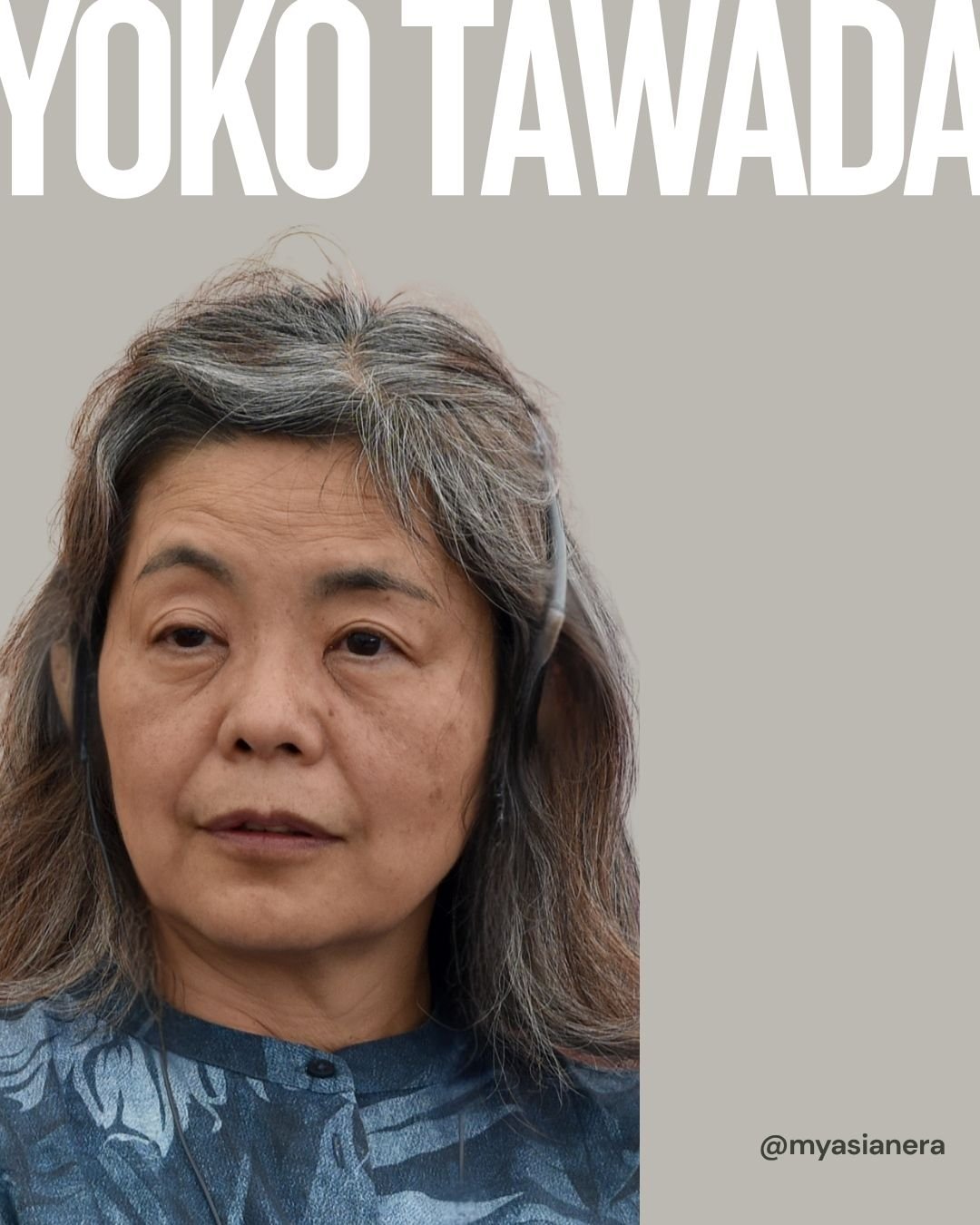
By Jindřich Nosek (NoJin) - Own work, CC BY-SA 4.0, https://commons.wikimedia.org/w/index.php?curid=120582495
With this being her birthday week, I thought it a perfect time for an author spotlight on Yoko Tawada, who turned 66 on Monday, March 23. She was born in Tokyo and has lived in Germany for more than forty years, first in Hamburg, then Berlin. She writes in two languages: Japanese and German. She has published original work in both. She has a word for what she does: exophonic.
Exophonic means existing outside of your mother tongue. Tawada has described the experience this way: "I was born into Japanese the way one is thrown into a sack. That is why this language became for me my exterior skin." German, she says, she swallowed whole, and it has been sitting in her stomach ever since. What this fed is one of the strangest and most original bodies of work in contemporary literature.
What She Writes
Yoko Tawada writes about language itself as a physical thing, something that lives in the body, that changes the body, that can make a familiar place suddenly foreign. Her characters often find themselves adrift from the culture they came from, or inhabiting one they were not born into. Strangeness is what the books are about.
Her work spans short fiction, novels, essays, poetry, and theater. Her recurring concerns are: what happens to identity when you change languages; what it means to be a body that does not fit the category it is placed in; what a country looks like once you can no longer take it for granted. In two of her novels, Japan has literally disappeared. It is a thought experiment she returns to because it lets her ask the question directly: what is a culture once its physical place is gone, and who carries it forward?
She has said that a writer "always needs to be foreign, even in their own country." You feel it in everything she has written.
Language has its own way of claiming you, and of letting you go. I have felt that distance myself, the way a second language can hold things a first one cannot, the way moving between them changes what you are able to say. Reading Tawada has felt less like discovery and more like recognition.
Her Work in English
Everything Yoko Tawada publishes in English comes through New Directions. Margaret Mitsutani has been translating her work for over twenty years and shared the National Book Award for Translated Literature with her for The Emissary. Susan Bernofsky, primarily known for her translations from German (Kafka, Walser, Erpenbeck), translated Memoirs of a Polar Bear from Tawada's own German version of the text. Tawada had first written the novel in Japanese, then translated it into German herself. What Bernofsky worked from was already Tawada writing in her second language. For a book about identity and the way language shapes the body that inhabits it, the translation history is part of the story.
The Emissary (trans. Margaret Mitsutani, New Directions, 2018) won the National Book Award for Translated Literature. It is set in a near-future Japan that has suffered a massive disaster and sealed itself off from the world. The logic of aging has reversed: the elderly are vigorous and strong, while children are so fragile they can barely walk. The novel follows Mumei, a young boy with a body that seems to be dissolving, and his 108-year-old great-grandfather Yoshiro, who tends to him with enormous tenderness. It is about what it means to love someone you cannot save, and about what a culture asks of the people left to carry it. It is also, quietly, very funny. I wrote about it at length in my review, if you want to go deeper.
Memoirs of a Polar Bear (trans. Susan Bernofsky, New Directions, 2016) is three generations of polar bears who write memoirs. The first bear becomes famous in East Berlin for her autobiography. Her daughter becomes a circus performer. Her grandson, Knut, is born in a zoo and raised by a human keeper. Tawada uses the conceit to examine performance, identity, and what it means to be observed and interpreted by a culture that does not share your language. It is the most formally playful of her books in English, and the one that best demonstrates the full range of her imagination.
The Scattered Trilogy (all trans. Margaret Mitsutani, New Directions) is her most recent project and, as of 2025, all the books are out. The three novels are Scattered All Over the Earth(2022), Suggested in the Stars (2024), and Archipelago of the Sun (2025). The trilogy follows Hiruko, a Japanese woman living in Scandinavia whose country has vanished beneath the sea. Because she cannot find anyone who speaks her language, she has invented a new one: Panska, a hybrid pan-Scandinavian tongue she uses to communicate with the mismatched group of companions she collects along the way. A Danish linguist. A Greenlander who once worked as a sushi chef. A German woman committed to social justice. A man in the process of changing sex. A former sushi chef who believes he is responsible for the entire group.
The trilogy is technically climate fiction. It is playful and propulsive, and the cast Tawada builds feels more like an accidental family than a thought experiment. The questions underneath it are serious: what do we owe each other across language and culture when the structures that once organized those debts have dissolved? But the tone is closer to comedy than catastrophe.
Exophony: Voyages Outside the Mother Tongue (trans. Lisa Hofmann-Kuroda, New Directions, 2025) is her essay collection on the experience of writing outside your first language. It was published in Japanese years ago and has only just arrived in English. If you want to understand how Tawada thinks before you read her fiction, this is the place to start. It is also, in itself, a beautiful piece of writing about what language does to a person and what a person can do to language.
Where to Start
Start with The Emissaryif you have not read Tawada before. It is short (under 200 pages), it won the National Book Award, and it demonstrates everything that is distinctive about her: the defamiliarized Japan, the body under pressure, the tenderness underneath the strangeness.
Start with Scattered All Over the Earthif you want something lighter and more propulsive. The trilogy is now complete, which means you can read straight through. It is the most accessible of her novels and the one that reads most like a traditional narrative, even as it does entirely unconventional things.
Start with Exophony if you want to understand the thinking before you enter the fiction. The essays are short, and they will change the way you read everything else she has written.
If You Have Read Her
If you came to Tawada through The Emissary, the Scattered trilogy offers a different register: more playful, more populated, and with a more explicitly multilingual cast. The two projects are in quiet conversation with each other. The Emissary asks what happens to a country that closes itself off. The Scattered trilogy asks what happens to a person whose country is simply gone. Read together, they trace what Tawada has been circling her entire career: what Japan means to the person who left it, and what it means when it can no longer be returned to.
For readers who came to Tawada through Han Kang: both writers use the body as a site of political and philosophical inquiry. Where Han Kang moves toward interiority and violence, Tawada tends toward play and surrealism. They are good companions on a shelf. Han Kang's Greek Lessons in particular covers adjacent ground: a woman who has lost her voice entirely finds she can communicate through learning classical Greek, a dead language almost no one speaks. The man teaching her is slowly going blind. Both Tawada and Han Kang keep returning to the same question: what do you do when the body can no longer hold the language it was given? If you want another Japanese woman writer in this experimental register, Hiromi Kawakami (Strange Weather in Tokyo, The Ten Loves of Mr. Nishino) shares Tawada's lightness of touch, though she stays closer to the texture of everyday life.
Yoko Tawada has been asking what language does to a body, and what a body does to language, for more than forty years. I am not sure she has arrived at a resolution, so I keep reading.
Fully free to read:
"The Far Shore" at Words Without Borders - a short story about Japan rendered uninhabitable after a nuclear disaster. Written before The Emissary but covers the same territory.
"The Texture of Angel Matter" at Granta - features a character at a Paul Celan conference in Paris.
"Memoirs of a Polar Bear" excerpt at Granta - opening section translated by Susan Bernofsky.
Good context reading (not fiction but free): "Where Words Dissolve: Yoko Tawada on Language as a Destabilizing Force" at Lit Hub her own essay. Pairs well with Exophony.
The Paris Review also has a substantial interview titled "Between Two Languages" that is worth linking as further reading.
Browse all of Yoko Tawada's available titles in my shop.
(This post contains affiliate links. If you purchase through my link, I may earn a small commission at no extra cost to you.)
