
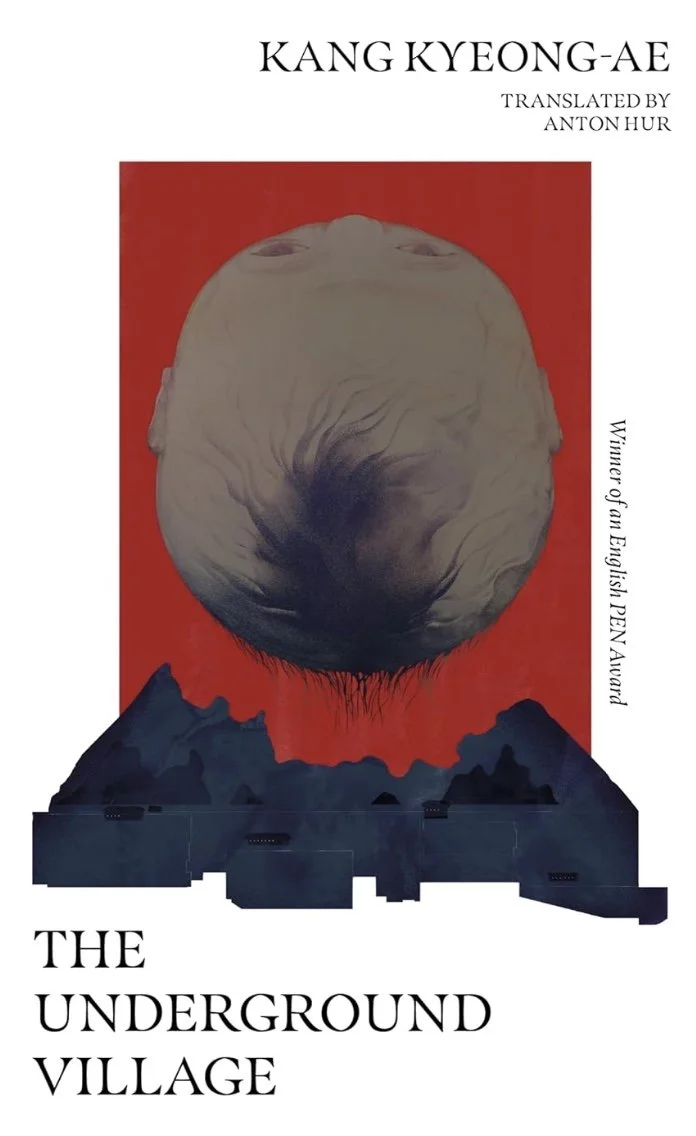
The Underground Village
by Kang Kyeong-ae translated by Anton Hur
Where to purchase: Amazon.com | Bookshop.org
This was the My Asian Era Book Clubs January read.
What It’s About
The Underground Village is a collection of short historical fiction by Kang Kyeong-ae, set against a world shaped by poverty, exploitation, and social division. These stories focus on people living at the bottom, where survival is constant and dignity is expensive.
If you’re looking for romance, hope, or anything uplifting, this is not that kind of book. This collection is dark, heartbreaking, and often difficult to keep reading, not because of the writing, but because of what the characters are forced to endure.
What Stuck With Me
This book is heavy. Not in a vague “emotional” way. In a concrete way. Hunger. Filth. Children raised inside despair. A world where money determines who gets to be treated like a human being.
One of the strangest moments for me, personally, was that the Authoress character is named Maria. That honestly jolted me. I don’t think I’ve ever read Korean literature where my name appears, and definitely not Korean historical fiction. But what made it even more unsettling was what she represented: vanity, boastfulness, pride, but in the negative sense. It felt like meeting a distorted mirror. You don’t forget that kind of detail.
Another story that stood out was “The Man on the Mountain.” What hit me there was the reminder that cruelty doesn’t only come from politics or economics. People will hurt each other even when they’re trapped in the same class, the same hardship, the same hunger. Sometimes even more viciously. That story made the book feel wider to me, like the point wasn’t just “rich vs poor,” but what desperation does to a community.
And then there’s the final story, “The Underground Village.” This was the hardest one to read.
The children in that story live in such extreme poverty that it warps their humanity. Death becomes normal. Filth becomes normal. Violence becomes normal. The part that disturbed me most wasn’t even the poverty itself, it was what it did to them emotionally. They weren’t just suffering. They were numb. There are moments where siblings feel disposable. Babies are treated like pests. Not because the children are evil, but because they’ve been pushed past the point where tenderness can survive.
The adults don’t come across as monsters either. They’re ignorant, yes, and sometimes frustrating. But mostly they are trapped. They’re trying to do their best in a world that has already decided they don’t deserve a chance. That’s what makes this collection so bleak. There isn’t a clear villain you can point to and feel satisfied about. It’s just a system and a reality that crushes people slowly, until what’s left of them is survival only.
The entire book was hard to read. It didn’t dragged and the writing was wonderful. It was hard because the storylines are hard to accept. Hard to stomach. Hard to imagine as real. Sadly, these stories don’t feel invented. They feel like history.
Would I Recommend It
Yes, with conditions.
If you read historical fiction because you want the emotional truth of what people endured, especially the poor and the exploited, this is worth reading. It doesn’t soften anything or give you relief scenes. It shows you what survival can really look like.
But if you’re looking for comfort, joy, romance, or even the feeling that things “work out,” skip this. This book is misery and loss.
This is one of those collections that leaves you quiet afterward.
My takeaway
Extreme poverty doesn’t just take away comfort. It takes people’s ability to feel like people.
If you like this you may also like:
The Accusation: Forbidden Stories from Inside North Korea is another brutal look at what survival looks like inside a system designed to control people.
Nothing to Envy: Ordinary Lives in North Korea follows ordinary North Koreans through famine, repression, and daily life where survival comes before everything else.
The Morgue Keeper by Ruyan Meng is not set in Korea, but has the same kind of crushing atmosphere: a man trying to stay invisible inside the Cultural Revolution, surrounded by death and a system built to erase people
