
The Accusation: Forbidden Stories from Inside North Korea
by Bandi, translated by Deborah Smith
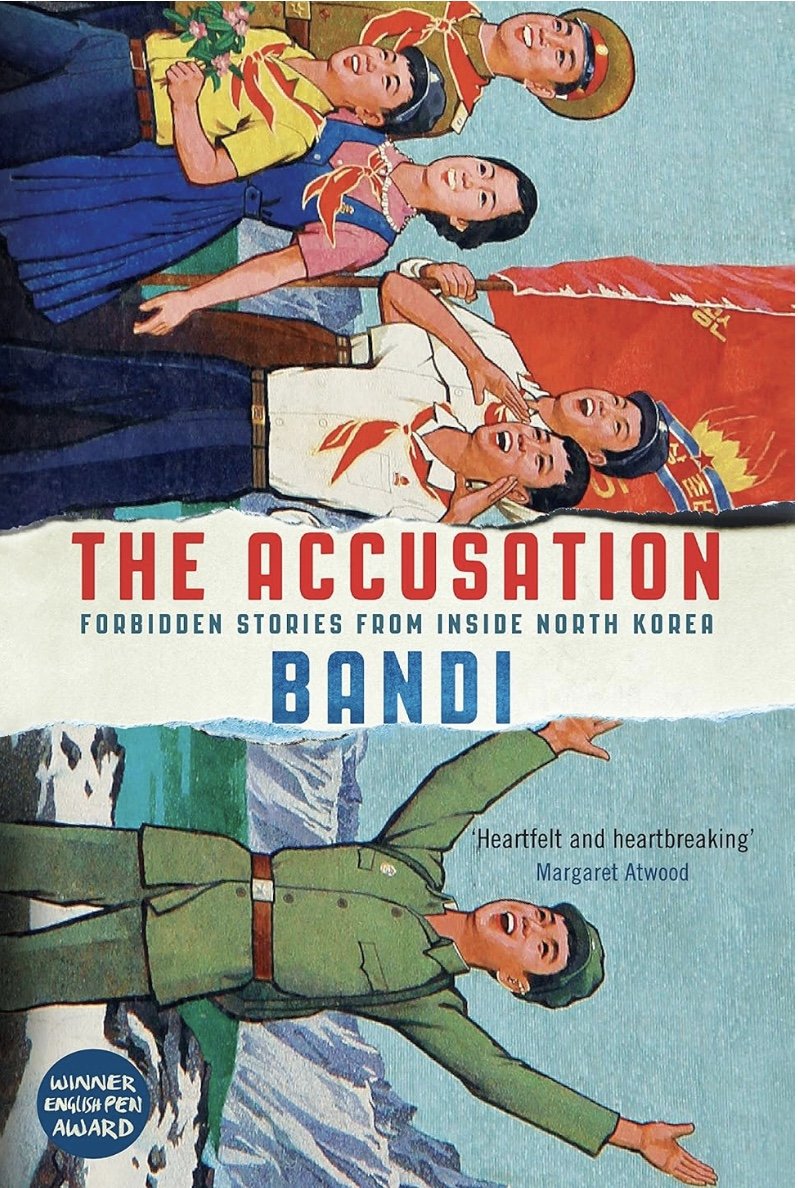
A note on the author
Bandi is a pseudonym. It means “firefly” in Korean. The author’s real identity has never been made public. At the time the manuscript was smuggled out, Bandi was believed to be living in North Korea, and there has been no verified public update on their situation since contact was reportedly lost in 2018.
The stories in this collection were written in the late 1980s and 1990s and later moved out of North Korea through intermediaries. The book was first published in South Korea in 2014, decades after the stories were written.
What It’s About
This is a collection of seven short stories set inside North Korea, focused on ordinary people navigating daily life under constant surveillance. These are not stories about escape or heroic resistance. They are about neighbors, families, workers, and party members trying to survive systems that demand loyalty while offering very little in return.
What Stuck With Me
What stayed with me was how restrained the stories are. They are not about grand acts of rebellion. The horror is procedural. People are punished for being careless, tired, or simply human.
Several stories hinge on moments that would feel trivial anywhere else. Here, they are dangerous. A look held too long. A thought expressed out of turn. A private grief that cannot be publicly acknowledged. That constant narrowing of what is safe to feel or say becomes exhausting as a reader.
I was also struck by how little the stories try to persuade. There is no pleading with the reader. No attempt to shock. The writing assumes the system as fixed and focuses instead on how people bend themselves around it. That quiet acceptance is unsettling in a way that lingers more than overt brutality.
These are not confessional stories. They read like documents smuggled out in pieces, careful not to reveal too much at once.
Would I Recommend It
Yes, but with conditions.
I would recommend this to readers who are interested in short fiction, political systems, and how power operates at the level of daily life. It works best if you are comfortable with understatement and unresolved endings.
This is not the book to read if you are looking for a comprehensive explanation of North Korea or a dramatic narrative of escape. It may also feel emotionally distant if you need characters to openly articulate their feelings.
My Takeaway
What unsettled me most was how normal everything felt. The stories show how quickly fear becomes routine when it has nowhere to go.
