
Hollow Inside
by Asako Otani,
translated by Ginny Tapley Takemori
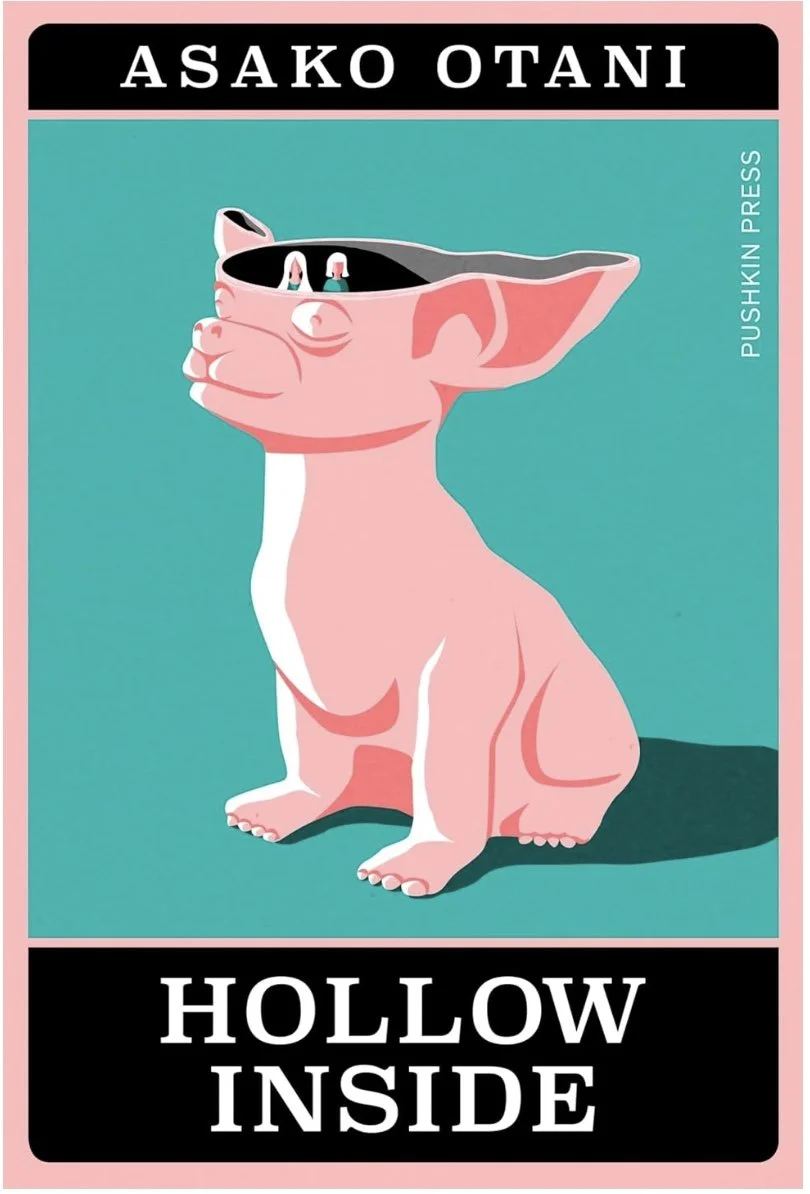
Published by Steerforth & Pushkin | Pushkin Press
Publish Date May 5, 2026
A note on the author
Asako Otani is a Japanese writer, and Hollow Inside is her debut novel. The book was originally published in Japan and later translated into English, by Ginny Tapley Takemori. It won the Subaru Prize, an award often given to emerging voices in Japanese fiction.
What It’s About
Hollow Inside is a short novel about two single women in their late thirties and early forties who decide to live together to afford a better apartment. Hirai and Suganuma meet through work and gradually build a quiet domestic life that sits outside the expectations of marriage, romance, and traditional family structures.
Hirai drifts through dating apps, office social events, and repeated reminders that time is running out. Suganuma, more practical and emotionally guarded, runs a small business using a 3D printer to create figurines of people’s deceased pets. Their shared life works until emotional and relational tensions surface, forcing both women to confront what they actually want, and what they are willing to let go of.
Rather than building toward a conventional resolution, the novel follows their choices as they settle into a version of family that does not fit standard definitions.
What Stuck With Me
What stayed with me most was the quiet loneliness running underneath the story. Not acute despair, and not something the book insists you feel, but a steady sense of emotional narrowing as the characters move through their days.
Hirai’s uncertainty felt central. The novel never names her desires in a clear way, and I appreciated that it didn’t rush to define her. There’s an ongoing tension around what she wants, what she has already let go of, and whether choosing not to decide is itself a kind of decision. That ambiguity felt deliberate, and at times uncomfortable.
The book is at its strongest when it focuses on small, practical choices rather than dramatic turning points. Decisions about work, housing, intimacy, and the future are handled with an almost flat tone, which makes their weight clearer rather than lighter.
I was also struck by the understated tenderness between the two women. Their care for each other shows up in gestures rather than declarations, and even when their paths begin to diverge, that connection doesn’t disappear. It simply changes shape.
By the end, I was left with a sense of hollowness. Not emptiness meant to shock, but the recognition that stepping outside traditional expectations doesn’t automatically resolve loneliness. It simply changes what that loneliness looks like.
Would I Recommend It
Yes, with the right expectations.
I would recommend Hollow Inside to readers who are drawn to quiet, character-driven fiction and who are comfortable with ambiguity. If you like novels that sit in emotional gray areas and resist neat conclusions, this will likely work for you.
This is not a book for readers looking for strong plot momentum, clear answers, or a sense of resolution. It’s also not interested in reassuring you that unconventional choices lead to happiness. It simply observes what happens when people step outside the lives they were told to want.
My Takeaway
This felt like a book about realizing that letting go of one future doesn’t automatically give you another. It just leaves you facing the life you’re already living.
Thank you to Pushkin Press and NetGalley for the digital review copy.
