
Men Without Women
by Haruki Murakami
Translated by Philip Gabriel and Ted Goossen
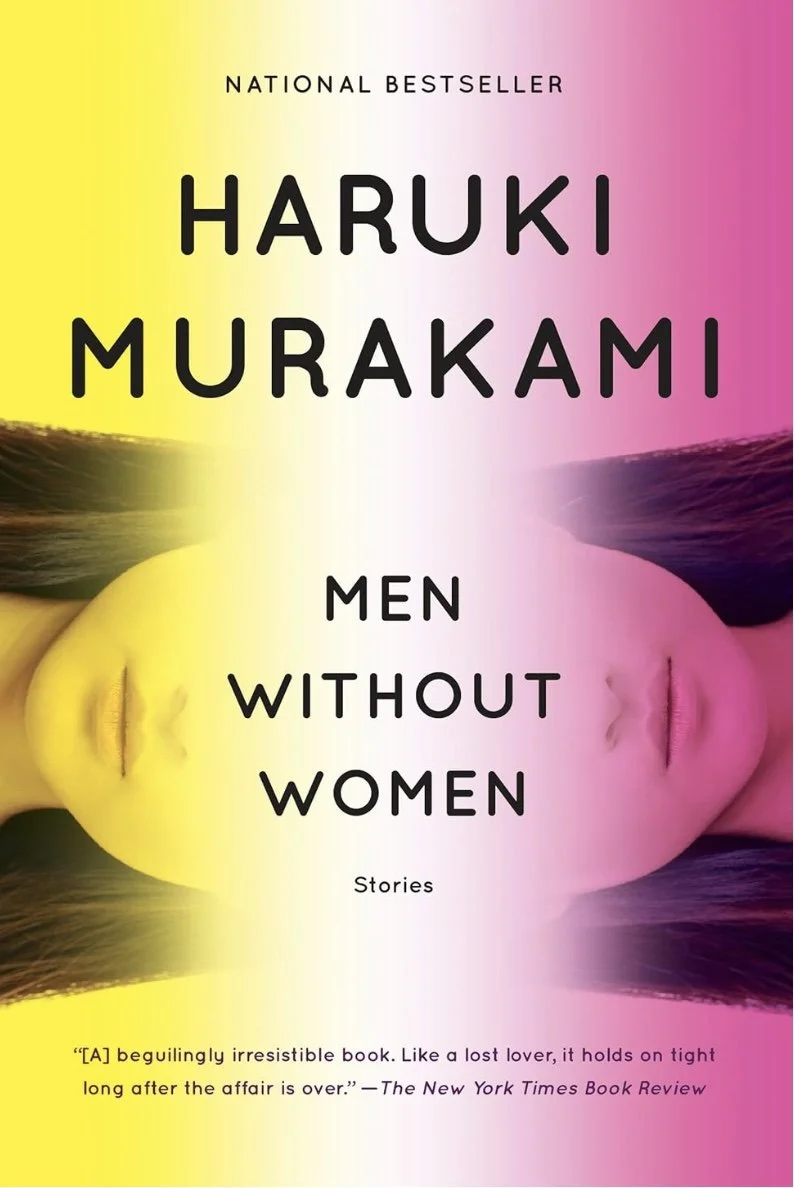
What It’s About
Men Without Women brings together seven stories about men who find themselves alone in one way or another. Some lose women they loved. Some never really had them. Some carry wounds they barely understand. Each story looks at what happens when connection slips away and what is left behind in the quiet that follows. Murakami moves between realism and surrealism, but the tone that carries the book is one of vulnerability, something softer than what I have seen in much of his work.
What Stuck With Me
I loved this collection. There is a tenderness here that surprised me. Drive My Car was a standout for me, and yes, the film is based on this story. The way Murakami writes men trying to understand their own grief, their own blind spots, their own longing felt honest and deeply human. An Independent Organ was heartbreaking in that slow, inevitable way where you see a man unravel without fully grasping why he is doing it.
People warned me that Murakami can be harsh toward women, but reading this book, I did not see cruelty. I saw perspective. These stories are written from the viewpoints of men who are confused, hurt, abandoned, overwhelmed, or simply unable to understand the people they loved. When one character talks about women having an “independent organ” that lies, it read to me not as an insult, but as a reflection of how men often misunderstand women. Women have their own logic, intuition, and emotional instinct. Men just do not always see it clearly. These stories show that gap.
The surreal pieces landed just as well as the grounded ones. Samsa in Love felt like the most Murakami of the group, strange and oddly tender. I do not know why the character wakes up afraid of birds or what exactly he was before, but I did not need to. Some stories are meant to be felt, not solved.
What stayed with me most was the vulnerability of these men. The way they hide it. The way it spills out anyway. The way they love, quietly and fiercely, even when they cannot say it out loud. It reminded me of the emotional undercurrent in Chungking Express, except this is Murakami so nothing resolves neatly. The ache just sits there, steady and real.
Would I Recommend It
Yes, absolutely. This might be my favorite Murakami so far. I think it is a wonderful place to start if you are new to him. It has the softness, the surreal edges, the emotional depth, and the careful attention to the strange corners of everyday life. Some readers may have trouble with how a few of the women are described, but if you remember that these are the interior thoughts of men who are struggling, it becomes something different. Not judgment, not misogyny, but confusion, longing, and absence.
If you want a quiet, beautifully written collection about loneliness, memory, love, and the limits of understanding between men and women, this is a lovely place to begin.
My takeaway: vulnerability makes people complicated, and Murakami lets that complexity stand without apologizing for it.
This post may contain affiliate links. If you make a purchase through these links, I may earn a small commission at no extra cost to you.
Where to Read It:
First time on Bookshop.org? Click for discount code
Also available via WorldCat if you want to check your local library
Looking for your next read?
My Asian Era is where literature meets culture, thoughtful reviews, quiet voices, and stories worth slowing down for.
You might also like:
The Essential Akutagawa - classic Japanese short fiction
At the End of the Matinee - a tender, emotionally layered story about connection and missed timing
The Beggar Student - a darker, introspective look at isolation
Colorless Tsukuru Tazaki - a quiet, introspective novel about loneliness and memory
