
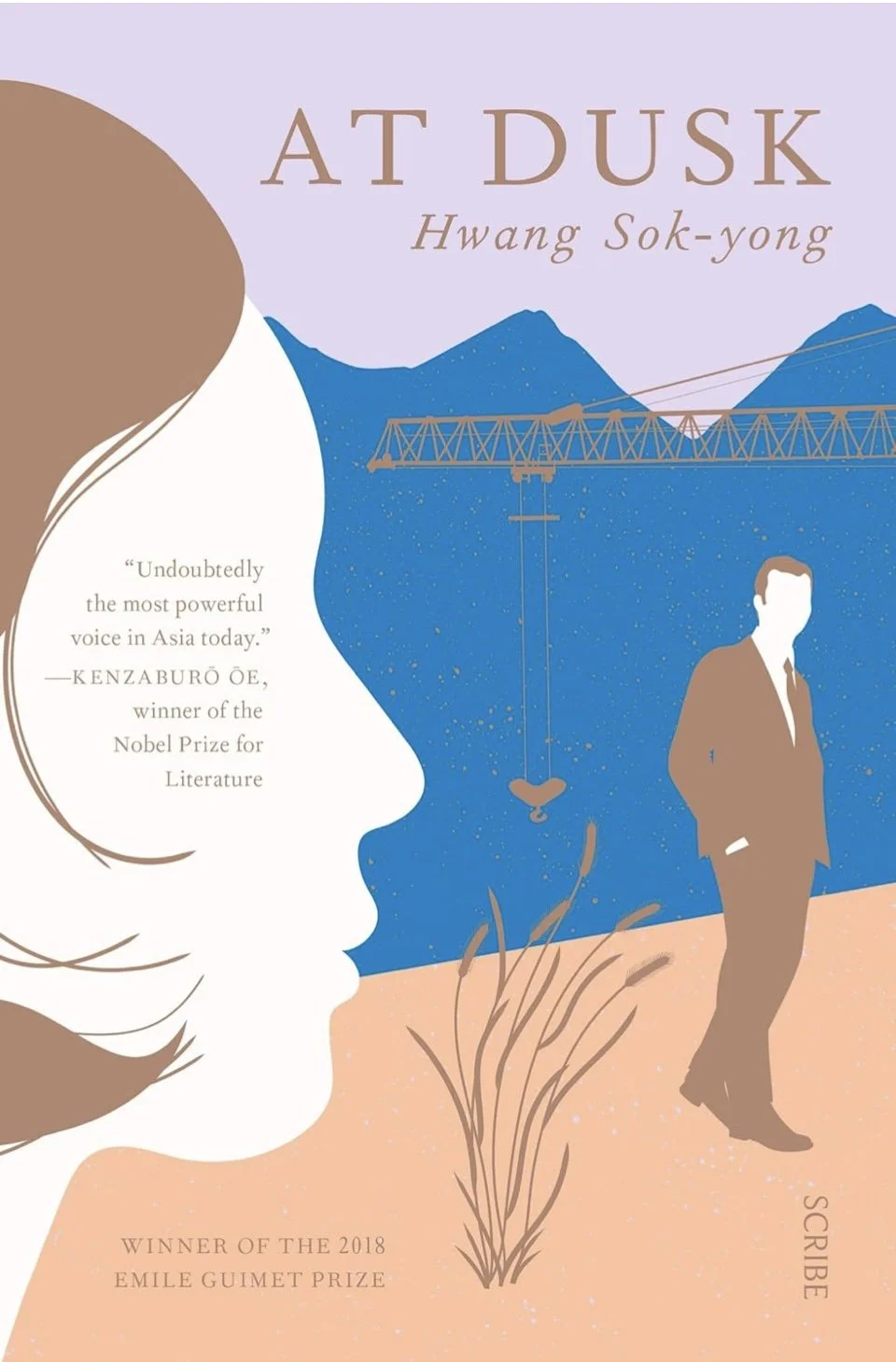
At Dusk
by Hwang Sok-yong
Translated by Sora Kim-Russell
Buy on Amazon , Bookshop.org
What It’s About
At Dusk is a quiet, expansive novel that follows one man’s life while moving steadily through modern Korean history.
At the center of the story is Park Minwoo, a successful director at a large architectural firm. His life appears settled and comfortable until an unexpected message arrives from an old friend, Cha Soona. Around the same time, the construction company he works with comes under investigation for corruption. These events begin to pull Minwoo back toward a past he thought he had left behind.
The novel moves between his present life in Seoul and his childhood, shaped by poverty and life on the outskirts of the city. The places he remembers are not the same ones that exist now. They’ve been transformed by development, ambition, and time. As Minwoo reflects on where he comes from, the book traces the postwar development of Korea, its political shifts, and its economic realities, without ever turning those forces into the main attraction.
History stays in the background. Present and unavoidable, but never the point. The focus remains on people, and on how they live through change rather than explain it.
What Stuck With Me
What stayed with me was how layered this book is without ever feeling heavy.
So much is happening beneath the surface. Economic growth. Political unrest. The cost of progress. All of it shaping the characters slowly, as they move through their lives. The novel never announces these forces. It lets them appear through relationships, work, memory, and loss.
I was struck by how revealing it felt without ever pushing itself forward. The characters grow and change as the country around them does, but they’re never treated as symbols. They remain people first. That restraint is part of what makes the book so effective.
Everything here felt considered. The pacing. The structure. The way one period gives way to another. It flows naturally, and by the time you realize how much ground the book has covered, you’re already at the end.
The translation disappeared completely for me. I was never aware of it, which is the highest compliment I can give.
Would I Recommend It
Yes, without hesitation.
I would recommend this to anyone who reads Asian literature, and honestly to anyone who appreciates novels that take their time and trust the reader. This is not a flashy book. It doesn’t chase urgency. It builds something lasting instead.
This felt like a gem to me. One of those books you wonder why you waited so long to read once you finally do. It asks for patience, but it gives a great deal back in return.
Where to Read:
This post may contain affiliate links. If you make a purchase through these links, I may earn a small commission at no extra cost to you.
Buy on Amazon, Bookshop.org
First time on Bookshop.org? Click for discount code
Looking for your next read?
My Asian Era is where literature meets culture, thoughtful reviews, quiet voices, and stories worth slowing down for.
If You Like This, You May Also Like
Human Acts
For its restrained approach to political violence and its focus on ordinary lives shaped by history.
Pachinko
For its long view of Korean history told through personal lives rather than historical explanation.
Please Look After Mom
For its attention to memory, family, and the quiet costs of modernization.
