
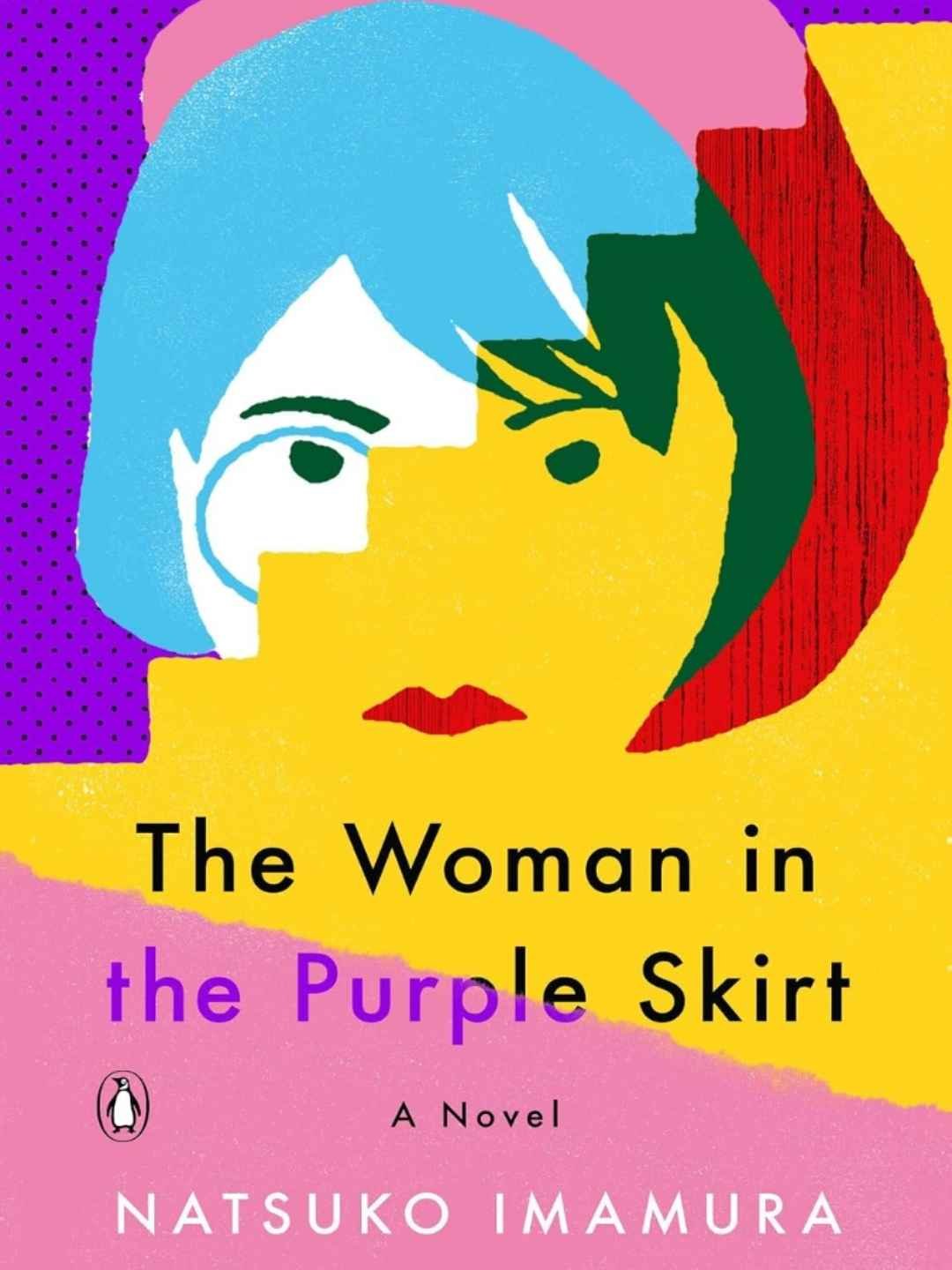
The Woman in the Purple Skirt
Point of View, Obsession, and the Stories We Decide Are True
by Natsuko Imamura
translated by Lucy North
This post contains affiliate links. If you purchase through one of these links, I may earn a small commission at no extra cost to you. I only link to books I have read and recommend.
Penguin Books
I have had so many feelings about this book since I finished it. My first reaction was, maybe I didn't like it. But I did, and I kept thinking about it. I have been having conversations in my head with myself for almost a week now. Did I get it? Did I not get it? Was this another Japanese story about loneliness, or was there more going on? What was real and what wasn't?
So many thoughts.
Point of view came up in a conversation recently, and apparently it was still sitting somewhere in my brain when I started thinking about The Woman in the Purple Skirt for about the tenth time. First person, third person limited, third person omniscient, all those different ways a writer decides who gets to know what.
This book is technically told in first person by the Woman in the Yellow Cardigan, but sometimes she talks about the Woman in the Purple Skirt with the confidence of someone who knows everything. What she is doing, what is happening in her life, even why she behaves the way she does.
Except she doesn't actually know.
It reminded me of people-watching at a café, when you notice someone at the next table and start making up a story about them. Maybe they are on a first date. Maybe they are coworkers. Maybe one of them is annoyed because the other was late. You know you are guessing because you only have a few gestures and scraps of conversation to work with.
Now imagine doing that with one person over and over until the story you created started feeling completely real.
That started to feel a lot like what was happening in The Woman in the Purple Skirt.
The Woman in the Yellow Cardigan has become completely fascinated by another woman in her neighborhood, the Woman in the Purple Skirt. She watches her routines, knows where she sits in the park, follows her through the neighborhood and eventually begins finding small ways to interfere in her life.
It is creepy, absolutely, but I also found it incredibly sad.
The Woman in the Purple Skirt is noticed. The neighborhood children notice her. People remember where she sits. Coworkers notice her. She moves through the world leaving an impression.
The Woman in the Yellow Cardigan seems to experience the opposite. She is there, but she is barely seen.
That loneliness became one of the most interesting parts of the book for me. Her obsession feels like more than curiosity. It starts to feel like projection, longing and maybe even a version of love, although I am still not completely sure what to call it. She seems to have so little connection of her own that watching another person's life begins to stand in for having one.
And because she tells us about the Woman in the Purple Skirt with such certainty, I believed her.
That may be the smartest thing Natsuko Imamura does here.
I knew I was reading a first-person narrator, and I knew she was watching this woman from the outside. Yet somewhere along the way I stopped asking what she could actually know. She told me what was happening and gave meaning to what she saw, and I accepted her version of it.
By the time I finished the book, I realized that the Woman in the Yellow Cardigan wasn't the only unreliable one in the relationship.
I had become a sort of unreliable reader.
Not in the formal literary sense, but because I had started participating in exactly what she was doing. She watched the Woman in the Purple Skirt, filled in the gaps and created a version of her life. Then I watched the Woman in the Purple Skirt through her and accepted those same gaps as truth.
So when the book ended, I was left with one question that would not go away.
What was real?
At first, that bothered me. I wanted to know which parts I could trust and have a little more certainty about what I had just spent the entire book believing. My immediate reaction was somewhere between liking it and feeling vaguely irritated that I was still sitting there trying to work it out.
But I don't actually need a book to wrap everything up neatly for me. I care much more about whether a book makes me feel something, whether it makes me think and whether it stays with me after I close it.
This one would not leave me alone.
The more I thought about the lack of resolution, the more I started wondering if the frustration was what the author wanted the whole time. We never get to step outside the narrator's mind and receive some clean, objective version of the Woman in the Purple Skirt. We only know what we have been told, what we have observed through someone else's eyes and what we ourselves decided to believe.
That feels uncomfortably familiar.
We do this all the time. We look at people and build stories from what little we can see. We make assumptions about why someone behaves a certain way or what kind of life they must have, even when we know there are pieces missing.
The Woman in the Yellow Cardigan seems to lose that distinction.
And for a while, so did I.
Lucy North's translation makes the whole thing move incredibly quickly. The language is clear, the pacing is fast, and there is something almost matter-of-fact about the way increasingly strange behavior is presented. That straightforward tone probably helped the narrator get past my defenses too. Nothing about the voice announces, "You should be suspicious of me."
I finished this book scratching my head. A few days later, I like it more than I did when I closed it, and I have to applaud a book that can do that.
Definitely worth the read.
Where to Purchase
Bookshop.org | Amazon | Libro.fm | Book Outlet
If you liked this you may also like
Diary of a Void by Yagi, Emi translated by Lucy North
Record of a Night Too Brief by Hiromi Kawakami translated by Lucy North
Hooked by Asako by Asako Yuzuki translated by Polly Barton
