
The Formosa Exchange
A Geopolitical Thought Experiment I Wasn’t Quite Ready For
by Huang Chong-Kai
translated by Jeremy Tiang
ARC Review
Honford Star | September 18, 2026
I think The Formosa Exchange was smarter than me.
I don’t mean that as a criticism. There is just an enormous amount going on in this book, much of it in areas where I don’t have a particularly strong background. Geopolitics. International affairs. The histories of Taiwan and Cuba. Colonialism, national identity, Indigenous politics, revolution, and what all of those things might look like in some imagined future.
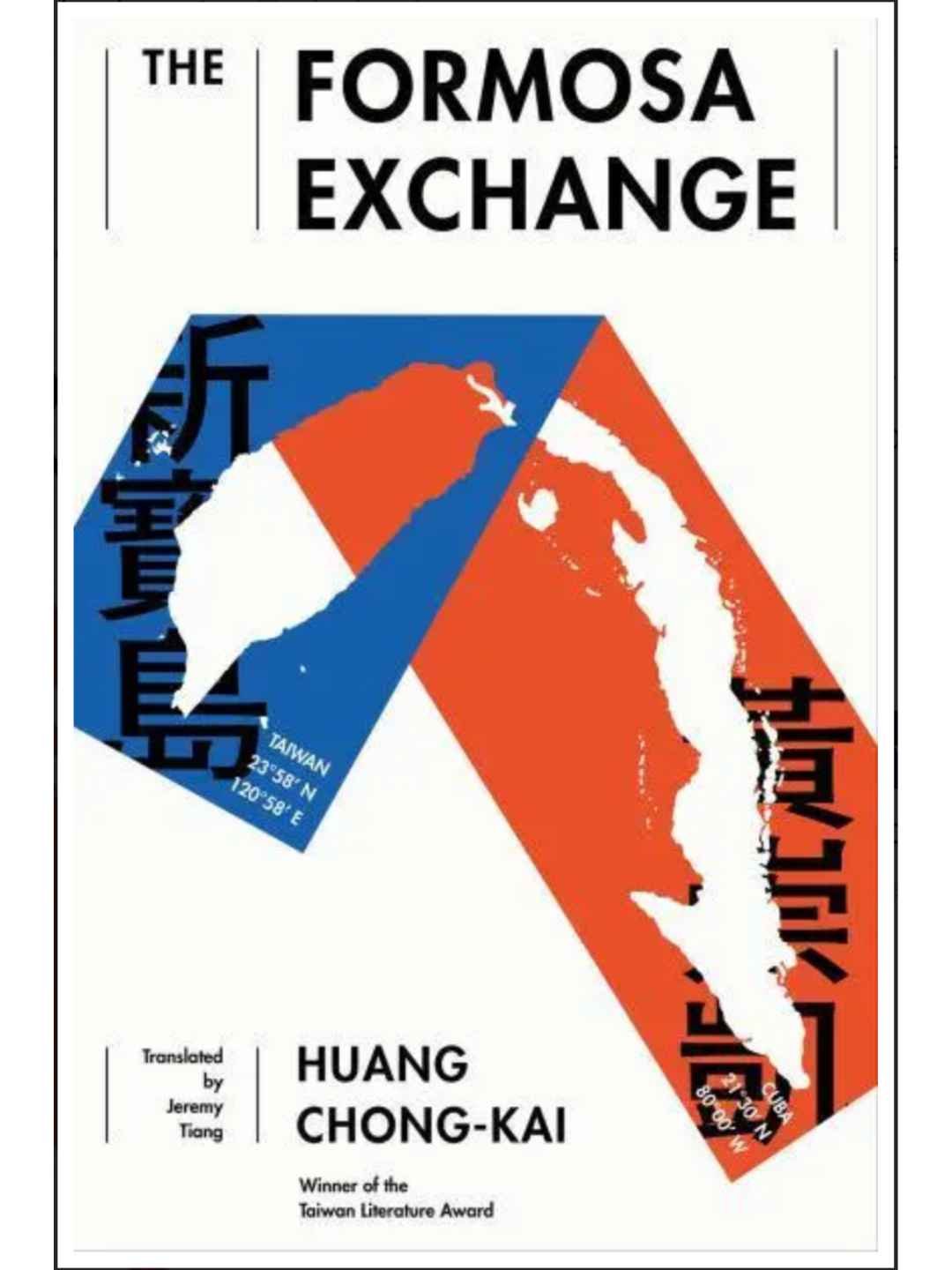
The premise itself is wonderfully strange. One morning, the populations of Taiwan and Cuba wake up to discover that they have somehow switched places. From there, Huang Chong-Kai starts asking what feels like every possible question about what such an exchange would actually mean.
The Exchange Is Really the Main Character
There are individual people and human stories throughout the novel, but I kept expecting one of them to eventually become the center of the book.
That never happened.
The exchange itself is the center. How would people respond? What would governments do? How would other countries react? What happens to ideas about nationality and belonging when an entire population suddenly wakes up somewhere else?
Each chapter approaches some different part of that enormous question. The book moves through history, politics, culture, race, Indigenous identity and international relationships, sometimes through individual stories and sometimes through completely different forms. At one point, we even get a book written within the world of the novel imagining what might have happened if the United States and China had been the countries that switched places instead.
The deeper I got, the more I realized I was reading something much closer to a sociological or anthropological thought experiment than the kind of speculative novel I was expecting.
I Could Have Read This With a Map and a Notebook
There was so much information here that I honestly could have treated the book like a class.
I could have had a map beside me, built a timeline, separated the politics of the novel from real history and stopped every few chapters to research what I didn’t know. There are sections involving Che Guevara, another involving Evita, Indigenous protests, Cuban and Taiwanese history, international relationships and political ideas that I simply did not have enough background knowledge to connect as easily as someone else might.
It reminded me a little of the first time I read fantasy or a spy novel that assumed I already understood the vocabulary and conventions of that world. Eventually I realized the problem wasn’t that the book wasn’t explaining itself. I had wandered into a kind of fiction I just wasn’t very familiar with.
It was a creature I didn’t quite know how to read yet.
And conceptually, I found it fascinating.
Jeremy Tiang’s Translation
The translation itself was never the problem.
Jeremy Tiang’s translation read smoothly and the pacing worked well for me. I understood what the book was saying even during the sections where I couldn’t quite put all of the historical and geopolitical pieces together.
The density came from the ideas and the amount of knowledge being brought into the novel, rather than from prose that felt difficult to get through.
This One Really Comes Down to the Reader
I can easily imagine someone who loves geopolitical fiction, alternate histories, international affairs or big speculative thought experiments having an absolute field day with this book.
For me, there were simply too many moments when I knew I needed more background knowledge than I had in order to really appreciate everything Huang was doing.
But I also came away respecting how ambitious it is. There is an incredible amount of history, culture and political thinking packed into the premise, and the book keeps finding another angle from which to examine what this impossible exchange might mean.
If geopolitical and idea-driven speculative fiction is already your territory, I suspect you are going to get much more out of this than I did.
Worth the read.
I received an advance copy of The Formosa Exchange through NetGalley. Opinions are my own.
Where to Purchase
Amazon | Honford Star | Blackwells
This post contains affiliate links. If you purchase through my links, I may earn a commission at no additional cost to you.
