
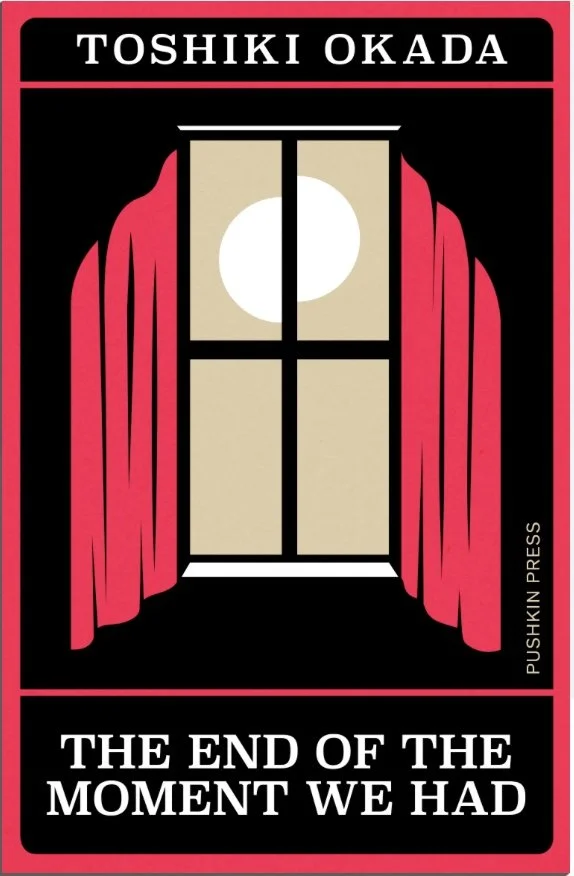
The End of the Moment We Had
by Toshiki Okada
Translated from the Japanese by Sam Malissa
What It’s About
This book is made up of two pieces, The End of the Moment We Had and My Place in Plural, though the first feels like it moves through more than one phase. It follows a man drifting through a series of loosely connected moments. An awkward encounter with a woman who overthinks every word and gesture. A night out that turns into a kind of open mic gathering. A sexual relationship that stretches on for days without much curiosity about the future.
Nothing here is framed as exceptional. These are small, contained moments. The book is less interested in outcomes than in what it feels like to be inside these situations while they are happening.
What Stuck With Me
I was impressed, especially by how precisely Okada captures interior thought. The first section, with the woman who spirals through every attempt at communication, felt sharply observed. The way her mind loops, stalls, and tries again rang true without feeling exaggerated.
The long stretch in the love hotel is quietly absurd and emotionally empty on purpose. There is sex, conversation, food, time passing. A kind of bond forms, but they never even exchange names. That emptiness did not feel like a flaw. It felt intentional. The backdrop of the Iraq War, with protests happening outside their cocoon, worked more as a marker of time than a statement. It reinforced the sense that this was a slice of life rather than a message.
My Place in Plural is where the book really stayed with me. A woman decides not to get out of bed, and the story follows her thoughts and physical adjustments as she lies there. I have done this. Not for the same reasons, but from the same mix of exhaustion, overwhelm, and low-level sadness. The attention to body movement, to trying to get comfortable and feel present in your own body, felt exact.
The first story will probably be the anchor for many readers, but it was My Place in Plural that I kept returning to.
Would I Recommend It
Yes, but to a specific reader.
This is for people who like quiet, observational books that act as windows into other lives. The events are ordinary by design, and the narrative tension stays low. If you need strong plot or clear emotional payoff, this will likely feel flat.
If you enjoy sitting with small moments and noticing how people think, move, and exist inside time, this one is worth reading.
My takeaway: Okada isn’t asking you to be moved by what happens. He’s asking you to notice how it feels to be there.
If you liked this, you may like
Yoko Ogawa, The Diving Pool
For precise interior thought and emotional unease without explanation.Banana Yoshimoto, Kitchen
For quiet observation and emotional distance that still feels intimate.Sayaka Murata, Convenience Store Woman
For its focus on interior logic and existing slightly out of step with expectation.
Where to Read It:
This post may contain affiliate links. If you make a purchase through these links, I may earn a small commission at no extra cost to you.
Buy on Amazon , Bookshop.org
First time on Bookshop.org? Click for discount code
Looking for your next read?
My Asian Era is where literature meets culture, thoughtful reviews, quiet voices, and stories worth slowing down for.
