
by Stine An
A Poetry Collection That Plays by Its Own Rules
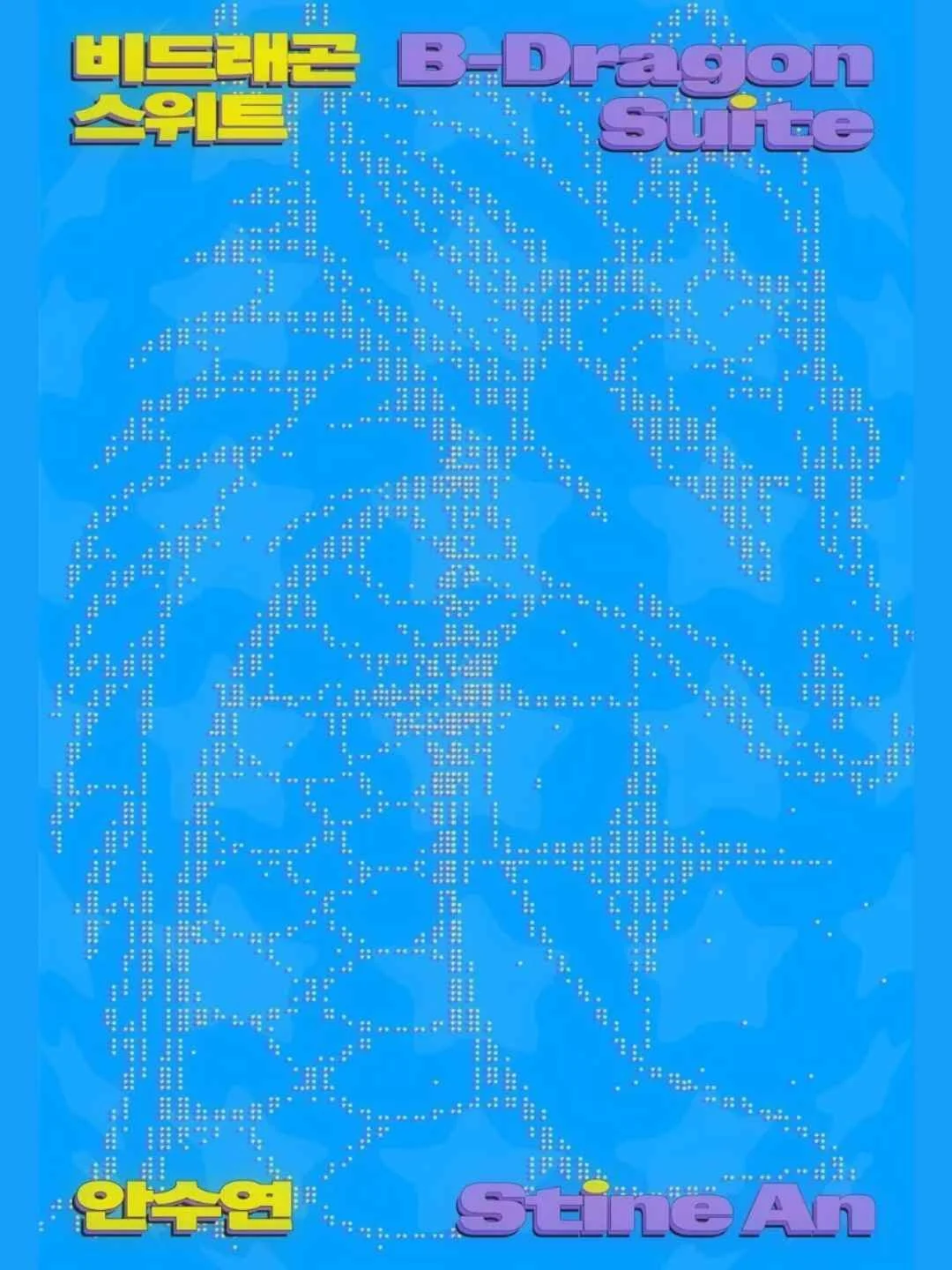
Author: Stine An
Publisher: Nightboat Books
Publication Date: October 20, 2026
Genre: Experimental Poetry
Review Copy: Gifted by the publisher
I have always loved linguistics. I love taking words apart, exploring their origins, finding connections between languages, and seeing what happens when we change how we use them. So when I started reading B-Dragon Suite by Stine An, I was delighted. Here was a poet playing with language in ways I found endlessly fascinating. I had so much fun reading it.
But this collection is considerably more complex than its playful presentation might suggest. Beneath the K-pop references, emojis, language exercises, and unexpected wordplay are explorations of identity, family history, migration, grief, and the complicated relationships we have with the languages we speak.
It is unlike any poetry collection I've read.
A K-pop Universe Built from Language
At the center of the collection is B-Dragon, a fictional K-pop idol whose adventures take us through an increasingly strange world of pop culture, mythology, language, and family history.
And if you're familiar with K-pop, you'll probably recognize the playful nod to G-Dragon, the iconic leader of BIGBANG. Stine gives us B-Dragon and a fictional group called LIL BANG, complete with stage names, elaborate member profiles, and over-the-top performances. It's a clever take on K-pop's carefully constructed personas, but she takes the idea much further, using B-Dragon to explore language, cultural identity, and the expectations placed on those identities.
The collection moves between Korean and English, occasionally bringing in German and other linguistic references. Words are broken apart, rearranged, repeated, and transformed. There are lyrics, sound exercises, illustrations, and passages that resemble everything from language lessons to theatrical scripts.
Even the name B-Dragon becomes part of the linguistic experimentation. Stine plays with the Korean syllable 비 (bi), exploring different meanings and associations through changes in language and context. Sound becomes as important as definition, and translation opens up possibilities rather than simply providing equivalent words.
Reading it sometimes feels like solving a puzzle. At other times, it feels like listening to an especially imaginative conversation in which every word might have three different meanings. I loved that.
Reading Between Languages
English was not my first language. My mother was an immigrant, and when our family returned to the United States, Italian remained the language spoken in our home. My mother didn't learn English until I was older.
Growing up across languages and cultures shaped my relationship with both. It's also part of why I've always been fascinated by the ways language carries so much more than its literal meaning.
My experiences are different from Stine's, but I recognized something familiar in her exploration of language, family, and cultural identity. And while my childhood was Italian-American, my family life today is also Korean-adjacent. Between those experiences and my love of linguistics, I found myself connecting with this collection on several levels.
I don't read Korean, which presented a challenge with B-Dragon Suite. Most of the Korean passages had the English included. But some of the wordplay depends on understanding how Korean sounds, words, and cultural references interact.
Rather than skip those sections, I spent time looking deeper into them and researching references I didn't understand. I did my best to wring out everything I could from the language, the wordplay, and the cultural references. This became one of my favorite parts of reading the collection.
There was something exciting about discovering why a particular word mattered or how a phrase could carry multiple meanings across languages. Some connections were funny. Others revealed much more painful histories.
I certainly wouldn't claim to have caught every linguistic nuance, even after working through it so closely. Some things simply don't transfer neatly from one language to another. But the process gave me a greater appreciation for the layers Stine has built into this collection.
When Language Becomes Personal
One of the sections that particularly interested me was Korean Language School in the Key of B Minor.
Here, Stine explores Korean language learning and the complicated expectations surrounding heritage, family, and cultural belonging.
The collection repeatedly returns to the idea that language isn't simply something we speak. It can connect us to family, traditions, and people we love. It can also carry expectations, frustrations, and complicated feelings about identity, particularly when our abilities don't match what others think they should be. That resonated with me.
Elsewhere, Stine takes a Korean idiom about a dragon rising from a stream and transforms it into an extended exercise in wordplay and translation.
The idiom traditionally describes someone rising from humble circumstances to achieve success. But Stine's experiments with its language invite us to think about what gets lost, altered, or unexpectedly discovered when an expression moves between cultures.
The exercise is playful, yet the questions underneath it are anything but simple.
What happens when the language we inherit doesn't quite fit the life we're living? What happens when a phrase familiar to one culture requires an entire explanation in another?
And what happens when we start questioning the expectations contained within those familiar expressions?
These were some of the moments when I felt particularly connected to the collection.
The Humor and the Hurt
For all its linguistic playfulness, B-Dragon Suite also addresses difficult subjects.
Family histories emerge through stories of poverty, displacement, violence, and survival. Korean mythology becomes another way of exploring abandonment, sacrifice, and grief.
I was especially fascinated by how Stine connects seemingly unrelated words and ideas. The sounds of Bari and bury, for example, create associations between mythology, death, and loss. Elsewhere, a tiny typographical change can transform a word and open up an entirely different reading. These aren't simply clever tricks. They change how we experience the poems.
Stine's approach to language sometimes shifts when the subject becomes especially painful.
In certain passages, the elaborate wordplay gives way to direct storytelling. The humor recedes, and we're confronted with experiences that don't need linguistic embellishment to make their impact.
One poem uses the familiar structure of a basic language lesson, identifying people and relationships through simple statements, to trace a painful family history. After pages of elaborate linguistic experimentation, that directness is especially affecting. I found the contrast powerful.
At other times, humor becomes a way of approaching difficult subjects rather than avoiding them. Stine can make you laugh at an unexpected turn of phrase and then, almost without warning, take you somewhere considerably darker.
The collection is playful, but it is never without purpose.
Poetry That Lives on the Page
I also want to mention the physical presentation of this book because it is an essential part of the experience.
Words appear in unusual arrangements. Symbols repeat across entire pages. There are illustrations, visual jokes, and sections where the absence of text becomes as noticeable as the words themselves.
In Tongue Laundry, for example, letters and sounds scatter across the page, turning the process of producing language into something visual.
Elsewhere, Stine uses the structure of language exercises, fictional character introductions, and performance scripts to challenge what we expect poetry to look like. You aren't simply reading the words. You're looking at how they interact with the space around them.
And sometimes the book asks you to look at almost nothing at all.
After sections filled with energetic language play, the quieter pages feel particularly deliberate. The contrast makes you more conscious of what is present, what is absent, and what might be left unsaid.
I particularly enjoyed the way the collection moves between these visual experiments and more conventional passages. Just when I thought I understood the direction Stine was taking, she'd introduce something completely unexpected. It's one of the reasons I would recommend experiencing this collection in its physical form.
My Final Thoughts
B-Dragon Suite is inventive, funny, challenging, and unexpectedly moving.
It asks readers to participate. You may need to stop and look something up, reread a passage, or spend time understanding a reference. And even then, you may not catch everything. I certainly didn't.
But I never felt that the effort was wasted. Quite the opposite. The more I explored the language and references, the more I appreciated what Stine was doing.
As someone who grew up between languages and cultures, I found parts of this collection deeply familiar. Our backgrounds and experiences are different, but I recognized the complicated relationship between language, family, and identity.
And as someone who simply loves linguistics, I found the experimentation enormously entertaining.
What I appreciated most was that Stine doesn't separate the pleasure of language from its complications. Words can be funny, beautiful, frustrating, misunderstood, and deeply personal. Sometimes all at once.
If you're curious about what poetry can do when a writer is willing to break apart its usual boundaries, B-Dragon Suite is well worth your time.
And for the record, dew is now one of my least favorite words.
Just read it.
I received complimentary copies of B-Dragon Suite from Stine An and Nightboat Books. Stine also generously shared additional materials. All opinions are my own.
