
by Haruki Murakami
Translated by Philip Gabriel
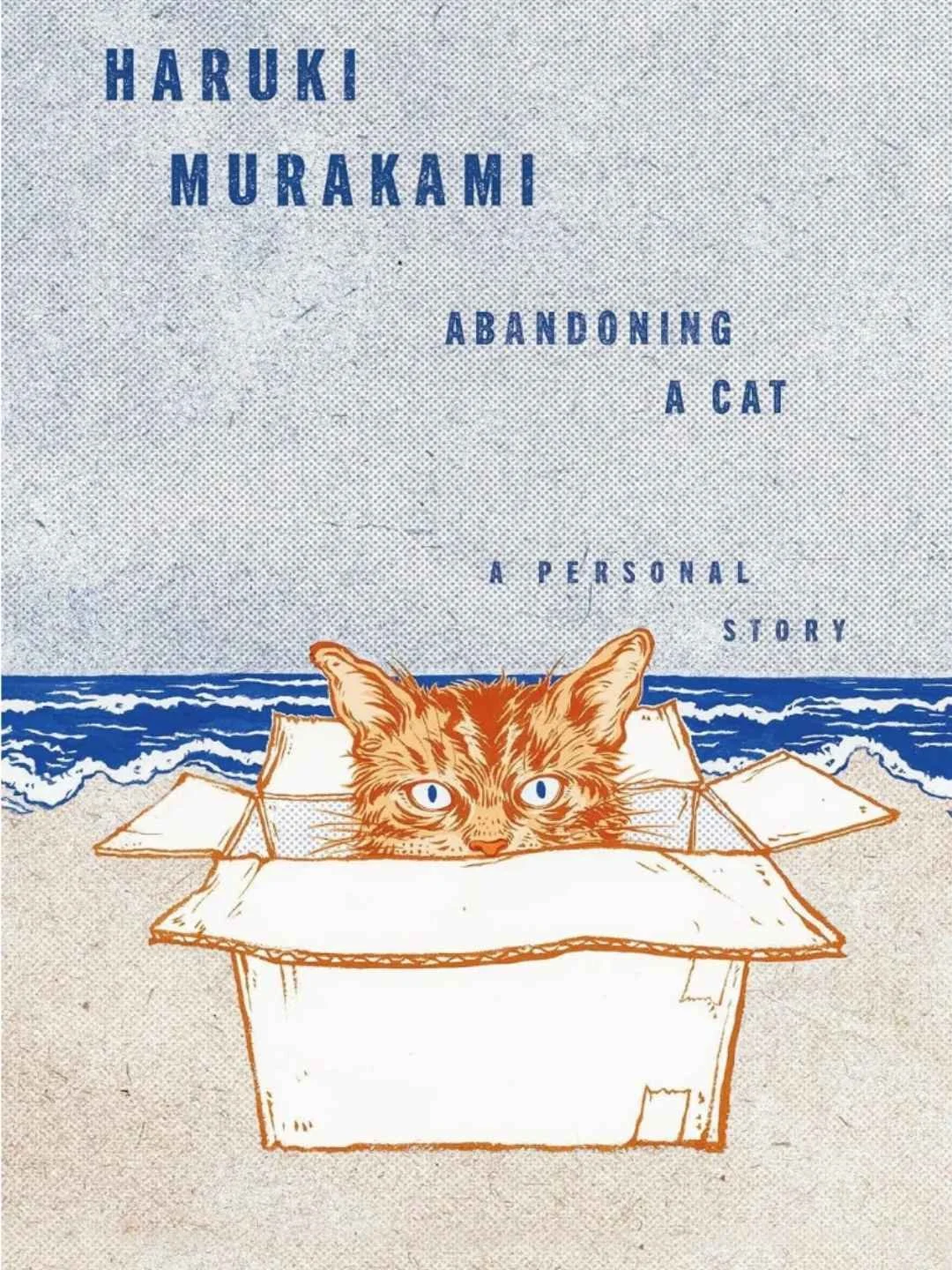
Illustrated by Yuko Shimizu
Knopf, October 27, 2026
Abandoning a Cat is a very small book about Murakami's father. This edition presents in full the personal essay that first appeared in The New Yorker in 2019.
I came away from it knowing a little more about the family and history behind a writer I have read for years.
The book begins with a childhood memory of Murakami and his father taking a cat to the beach to abandon it. He doesn't remember why they were getting rid of the cat, and he doesn't remember being particularly sad about it. It is simply something he remembers doing with his father.
From there, he starts looking back at his father's life, what he knows about it, what he once thought he knew and what he found out later.
Here Is My Father
This was how the book felt to me. Murakami was basically saying, here is my father and this is what I know of him. Accept it for what it is, just as I have had to.
His father came from a devout Buddhist family and studied religion and literature. While studying, he failed to complete paperwork that would have given him a student exemption from military service. That mistake led to his first conscription, and he would eventually be drafted three times.
His father did not talk much about what happened during those years, so there were things Murakami believed about his military service that he later went back and researched for himself.
Some of what he found gave him answers, but a lot of his father's life still remained unknown to him.
The Japanese army was brutal, and there are parts of his father's military life that Murakami simply cannot know. What I liked was that he didn't try to imagine those missing pieces for us. If something he believed turned out to be wrong, he tells us. If the records give him an answer, he gives us the answer. When there isn't one, he doesn't invent it.
He also gives us small glimpses of how the war stayed with his father long after it ended.
More Than the Soldier
The military history takes up quite a bit of the book, but that isn't the only father Murakami shows us.
His father wrote haiku, including during his military service, and Murakami shares some of them. He later became a teacher, and former students continued to seek him out even late in his life.
Murakami is also open about the problems in their relationship.
He wasn't the kind of student his father had hoped he would be, and Murakami wonders if some of his father's expectations came from his own interrupted education.
What I liked was that Murakami didn't seem interested in making their relationship neater than it was. He is simply showing us the man as he knew him.
His Parents' Lives
As Murakami looks back at both of his parents, he begins to see how many small circumstances had to happen exactly as they did for him to exist at all.
The book gave me a little more understanding of the family and history Murakami came from without pretending that he could explain all of it.
And Yes, There Are Cats
The cat memories frame the book, and the idea of abandonment doesn't stay limited to the cats. As Murakami tells us more about his father's childhood, it starts to mean something different.
And learning that Murakami regularly had cats around him growing up did make me laugh a little.
That explains a few things about his books.
Philip Gabriel's Translation and Yuko Shimizu's Illustrations
Philip Gabriel's translation reads very plainly and directly here, which works with the way Murakami approaches his father's story. He is dealing with memories, records, dates and things he was able to verify later, and the writing never called attention away from that for me.
I loved Yuko Shimizu's illustrations.
Honestly, the illustrations may be more "Murakami" than the book itself.
They have some of the strange, slightly surreal quality I associate with his fiction, while the story he is telling here is much more straightforward.
Who Should Read Abandoning a Cat?
This reminded me a little of Light and Thread by Han Kang in one specific way. Part of the pleasure comes from already knowing the writer and then getting this small window into the person behind the work.
If you already enjoy Murakami, I think Abandoning a Cat is worth reading for exactly that reason. You get a little more of the religion, literature, family history and complicated relationship with his father that were part of his upbringing.
If you've never read Murakami, I wouldn't start here.
This isn't a Murakami novel or short story in the sense of what most of us mean when we describe something as "Murakami." It is a small personal history of his father, his family and the circumstances that eventually produced the writer we know.
I will probably find myself looking for traces of that upbringing when I read his fiction in the future.
Definitely worth the read.
Thank you Knopf for the gifted copy. Opinions are my own.
Where to start with Murakami
Kafka on the Shore A young man in 1960s Tokyo is caught between grief, memory, and two very different relationships.
Norwegian Wood A runaway teenager and an older man with a strange connection to cats move through a surreal story of fate, memory, and identity.
