
This post contains affiliate links. If you book through them, I earn a small commission at no extra cost to you.
My uncle had an apartment near the Piazza di San Marco for years. He split his time between Venice, his home in Sardinia, and Paris. He traveled that triangle for most of his adult life and I never once went to visit him.
I think about that now. I think about all the mornings I could have had in that city, the coffees and the light and the sound of water where you'd expect street noise, and I let them pass. By the time I finally got to Venice this April, my uncle was gone and the apartment was long sold.
I loved Venice so much that I spent the whole trip thinking: why didn't someone tell me sooner? Why didn't I already know?
We had four nights. We stayed right off San Marco, walked every day until my phone died, got genuinely lost more than once, and came home already planning to go back. This is what I'd tell you before you go.
The City Nobody Tells You About
Most Venice content is written by day-trippers. You can feel it in the framing: the gondola photo, the Bridge of Sighs, the overwhelm at San Marco, the train home by dinner. That is one version of Venice. It is not the version worth traveling for.
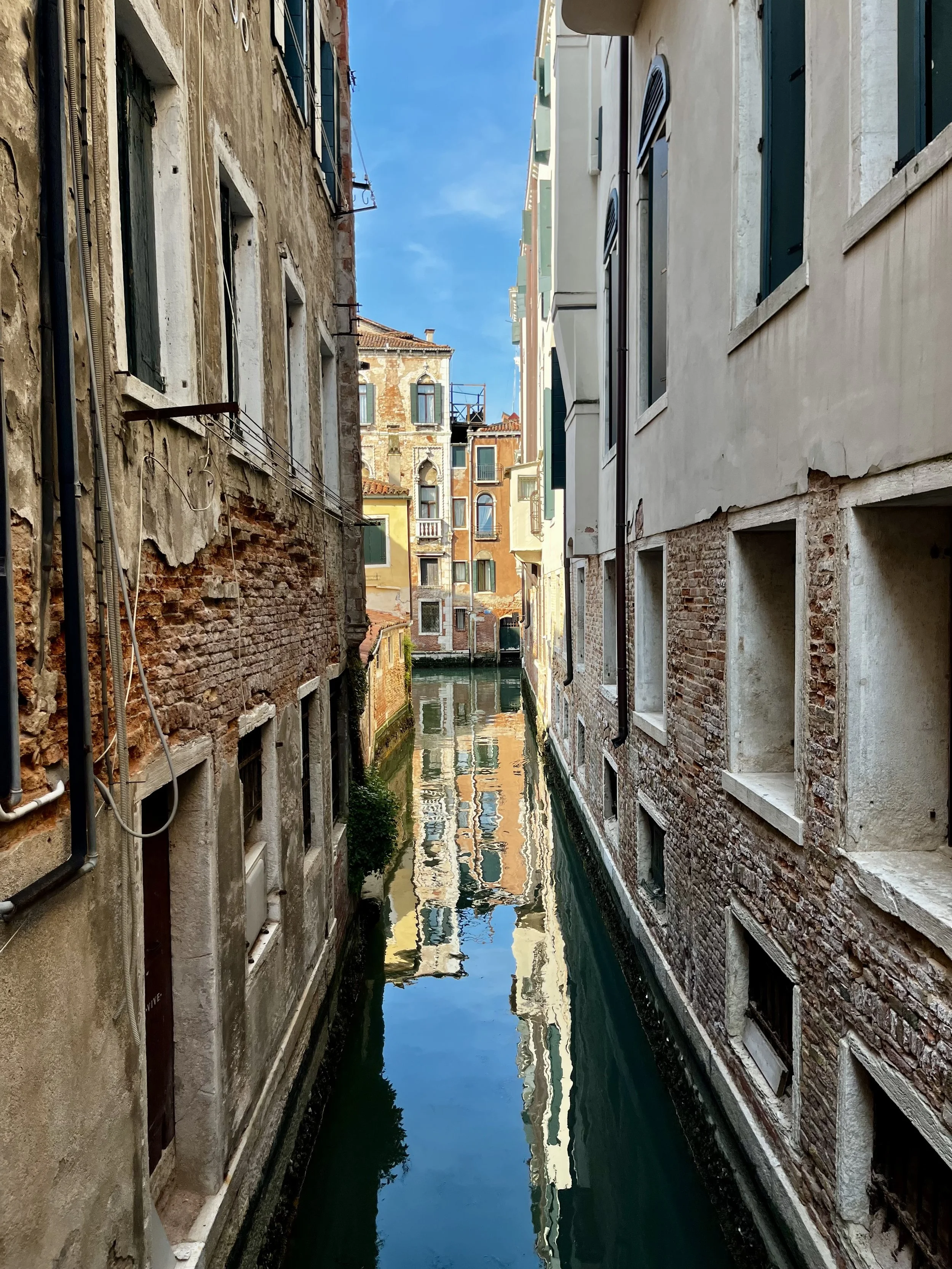
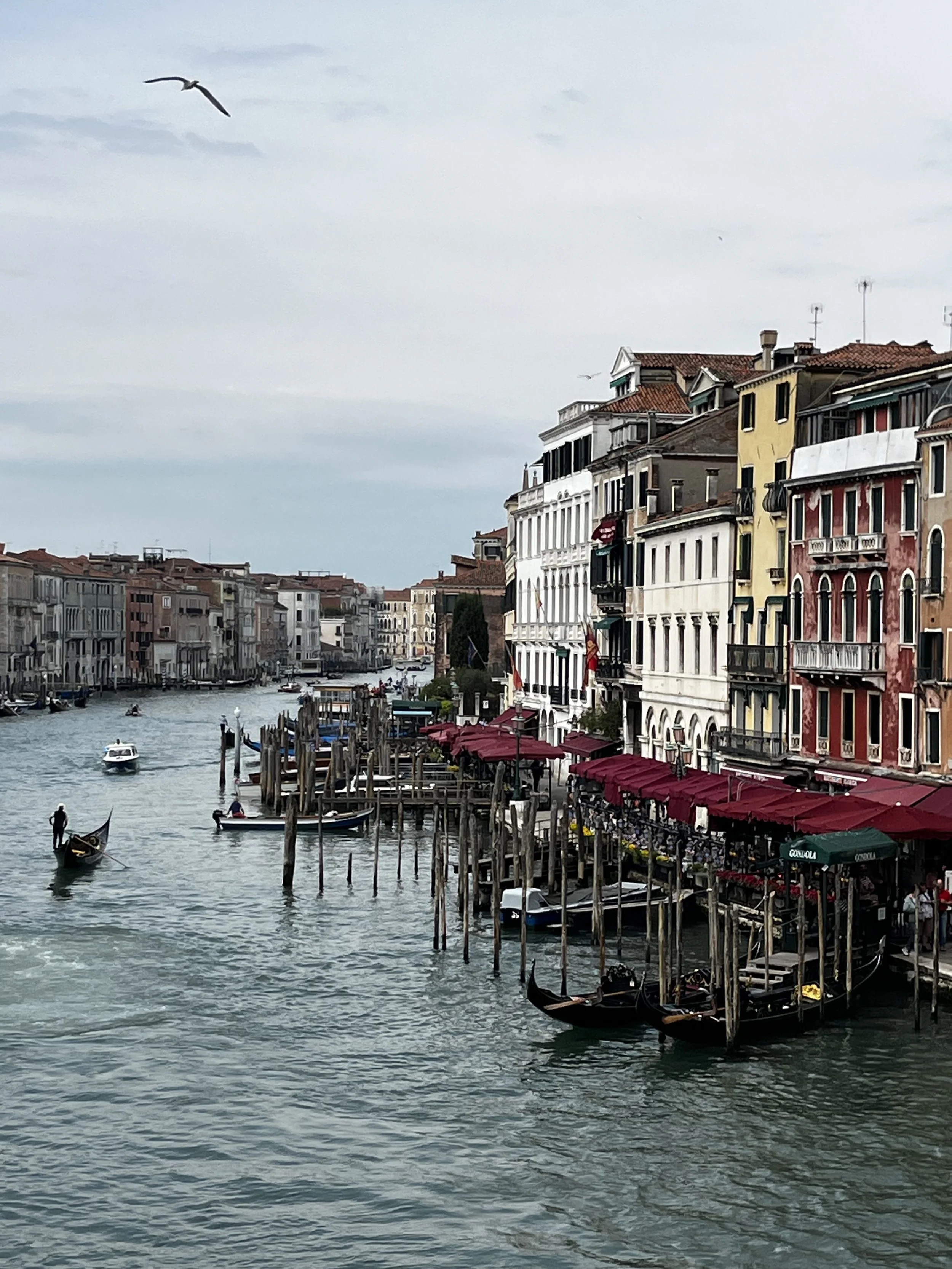
Venice is a city that rewards staying. The crowds that make those little streets feel impossible at noon are almost entirely gone by 9pm. The cafes that charge you extra for sitting outside near the tourist corridors are half the price three streets inland. The whole city changes when you're not trying to see it in six hours.
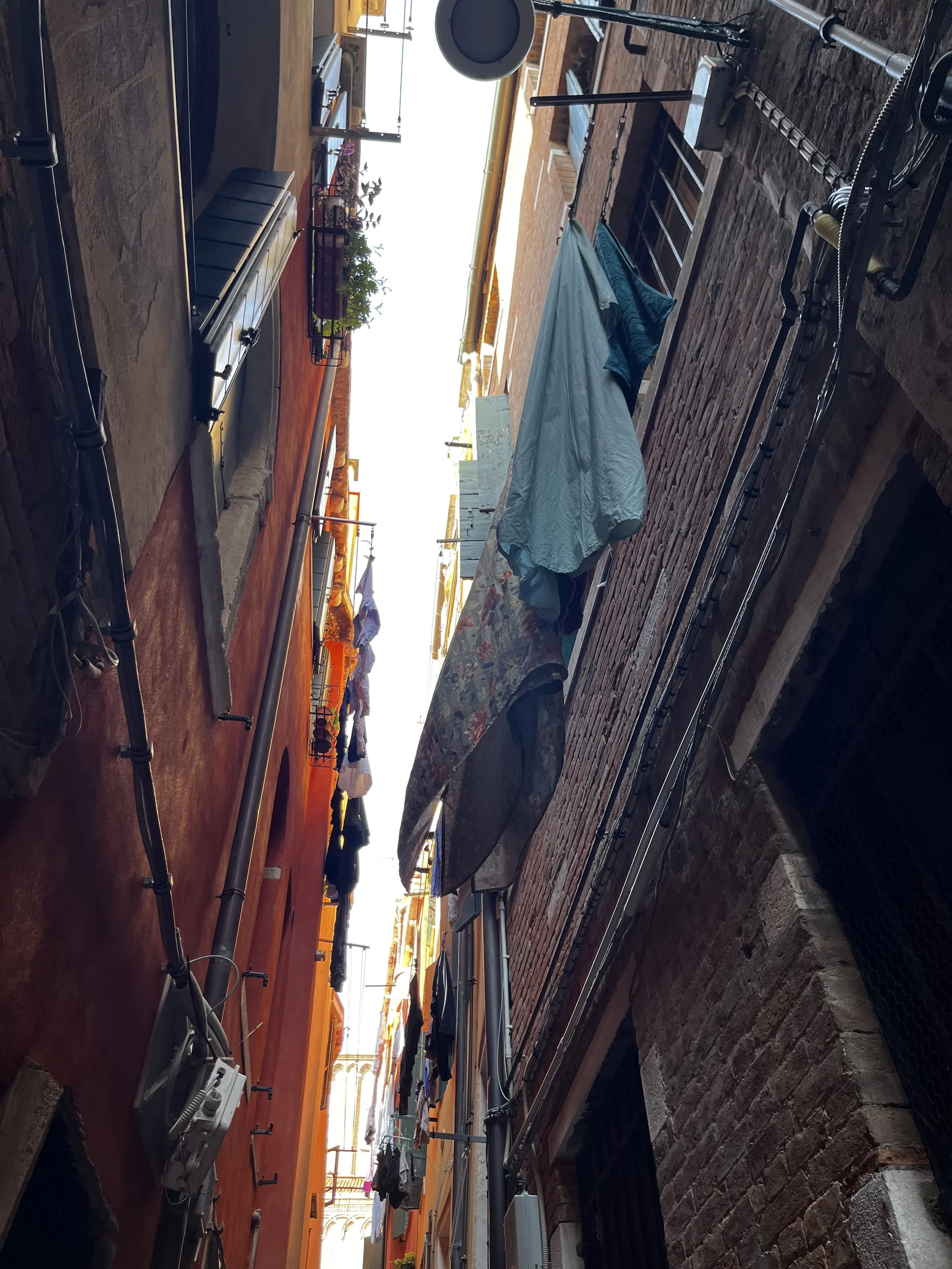
What surprised me most was how much the city sounds different. No cars. No buses. Just footsteps on stone, bells, and water. It changes your pace without you realizing it. By the second day we were just walking, not going anywhere in particular, because there was always something around the next corner and none of it required being anywhere on time.
We started every morning early, before eleven, because by midday the streets near San Marco were so packed I'd start to feel anxious. That was fine. It just meant mornings were for walking and afternoons were for sitting still somewhere quiet. That rhythm turned out to be exactly right.
Staying and Getting Around
We were at the Hotel Cavalletto e Doge Orseolo, right off Piazza San Marco. Location-wise it's hard to beat: you step outside and you're immediately in the middle of things, which is both amazing and occasionally the problem. On the days when the square was full of tourists, having a quiet room to retreat to made a real difference. If you want something similar, Travelocity has the Cavalletto and other San Marco-adjacent hotels listed here.
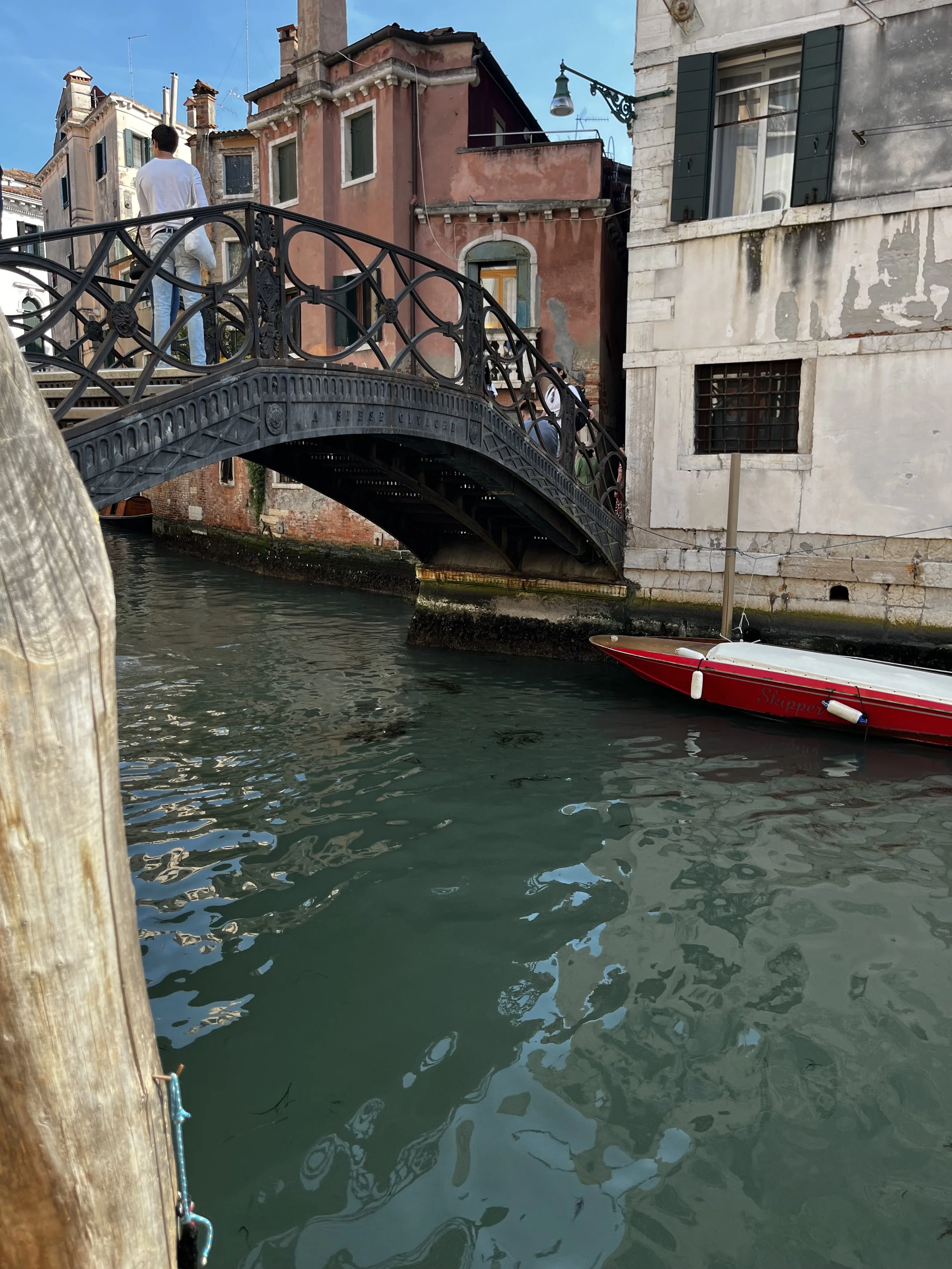
One practical note before anything else: bring a portable phone charger and do not forget it. I say this from personal experience. I was using an eSIM for data (aloSIM, which worked perfectly throughout Italy) and my phone was my map. Venice's streets are small enough and similar enough that what Google says is a six-minute walk can turn into twenty if you miss your turn. Which you will miss, because some of those turns are barely wider than your shoulders.
There was an afternoon we were trying to find the Libreria Acqua Alta and I think Google was routing us through a waterway at one point. The street we needed to turn on was so narrow I walked past it twice. We found it eventually. And then I needed to get back with about 15% battery left, which is when I discovered the easiest navigation trick in the city: follow the signs to the Piazza. Every neighborhood has them. Once you're at San Marco, you can find anything.
We took the public water bus (vaporetto) a handful of times. It is very slow and often crowded but it is also genuinely beautiful and costs a fraction of a water taxi. For the islands you need it regardless. For getting across the city quickly, water taxis exist and next time I might actually use one.
The Bookstore You Need to Find Twice
Libreria Acqua Alta is the most photographed bookstore in Venice, which means the staff are exhausted by tourists before noon. We went in the first time mid-afternoon and felt rushed almost immediately. The person working near the door had the look of someone who has answered the same question eight hundred times that week.
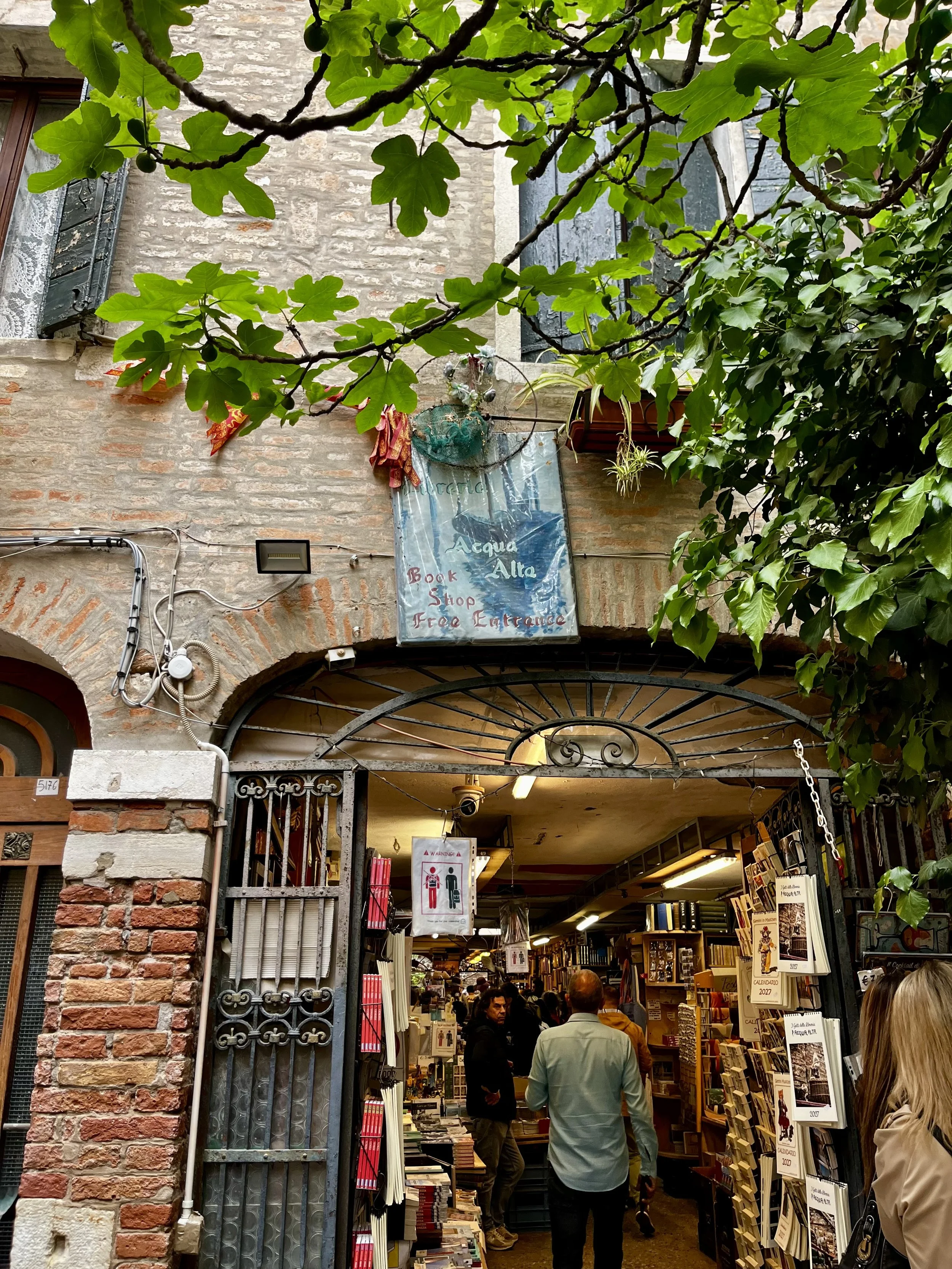
We went back. Earlier the second time, and with the specific intention of buying something. That changed the dynamic entirely. Once I said I wanted to buy something, the whole energy shifted.
The reason it's worth pushing through: go to the back. Most people see the front of the store, take their photos, and leave. The back half is used books, and it opens onto a canal. There are chandeliers, a gondola filled with books, and a window that looks directly out onto the water. Amazing in pictures, even more amazing in person.
What We Did (and What I'd Do Differently)
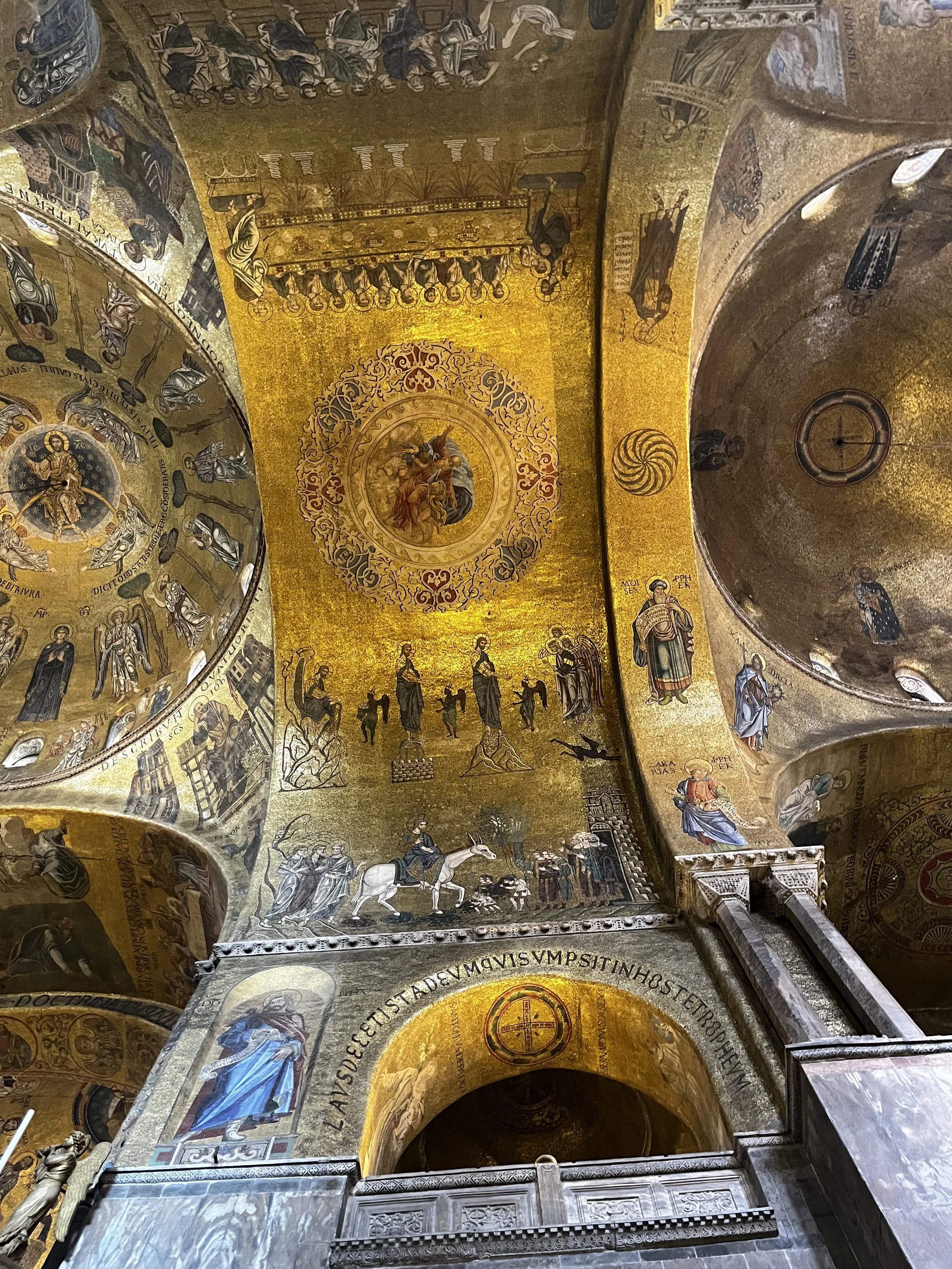
We did the Doge's Palace and St. Mark's Basilica together through Get Your Guide. The tour was supposed to be self-guided audio, but one of their guides decided she wanted to come in person because, as she said, she likes to talk and loves to share the history of her home. I wasn't expecting that, and it made the whole tour.
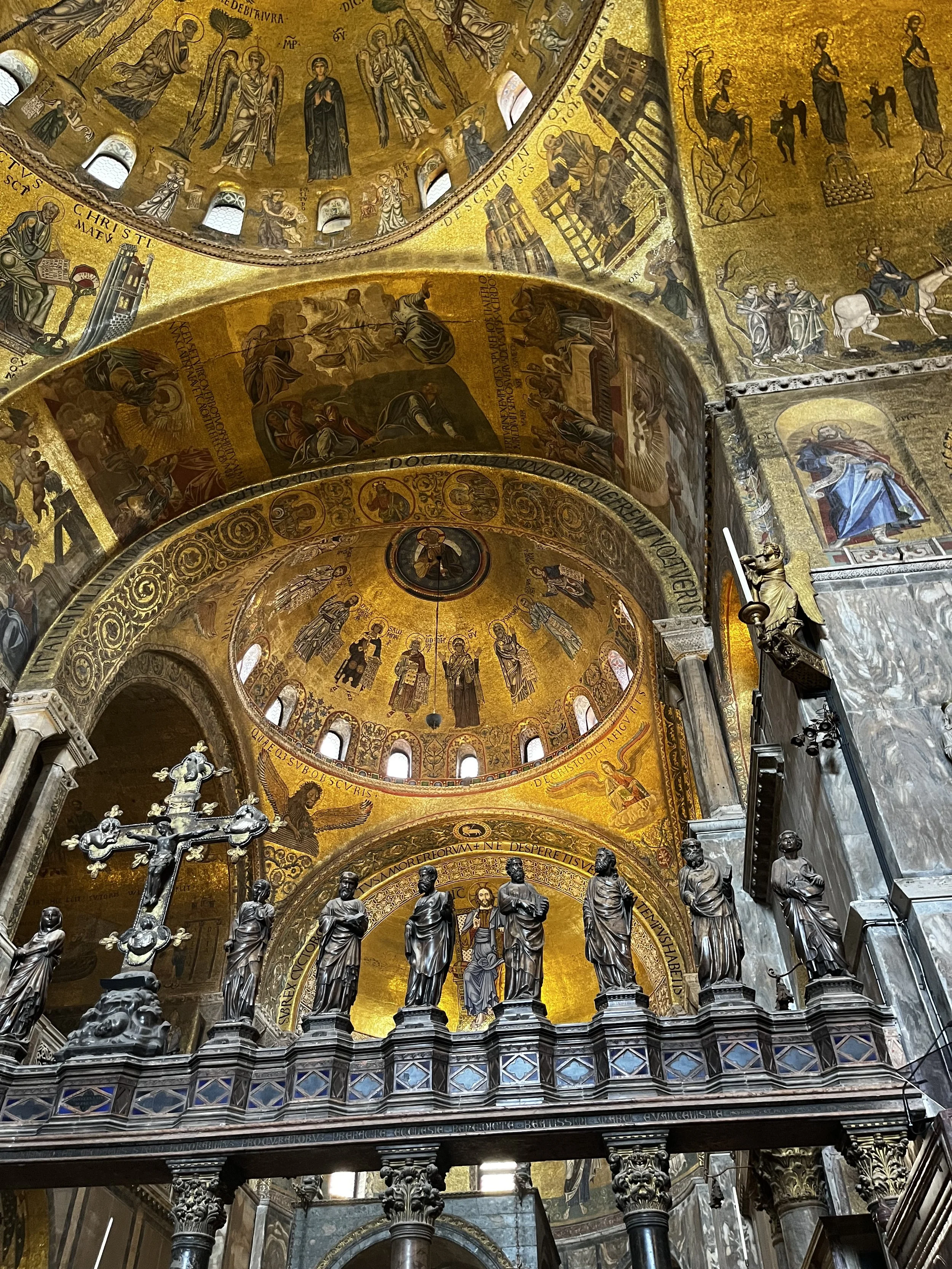
She explained something inside the Basilica that I keep thinking about. Venice was the point where East met West for centuries, and the physical evidence of that is in the ceiling. At a certain point, the inscriptions switch back and forth between Latin and Greek characters. You're standing in the same building watching two alphabets trade off, and suddenly the whole history of the place makes sense in a way it doesn't from a guidebook.
We did not make it to the islands. We had a bad experience with a missed Murano/Burano tour due to a flight delay. We considered taking a free tour our hotel offered, but decided not to go this time. Four days is not enough for the islands and the city. Pick the city.
GetYourGuide — Doge's Palace Skip the Line + Basilica tours
The Thing About Time
People told us three days would be plenty, especially if we were doing the islands. They were wrong. We did four nights and skipped the islands and still felt like we'd only just started to understand the city's shape by the time we left.
The Rialto Market is closed Sunday and Monday. We arrived on a Saturday and got there too late. That's one thing I'd fix. I'd also give myself a full day in Cannaregio, because what I saw of it on walks suggested it's the part of Venice that most feels like somewhere people actually live.
Going Back
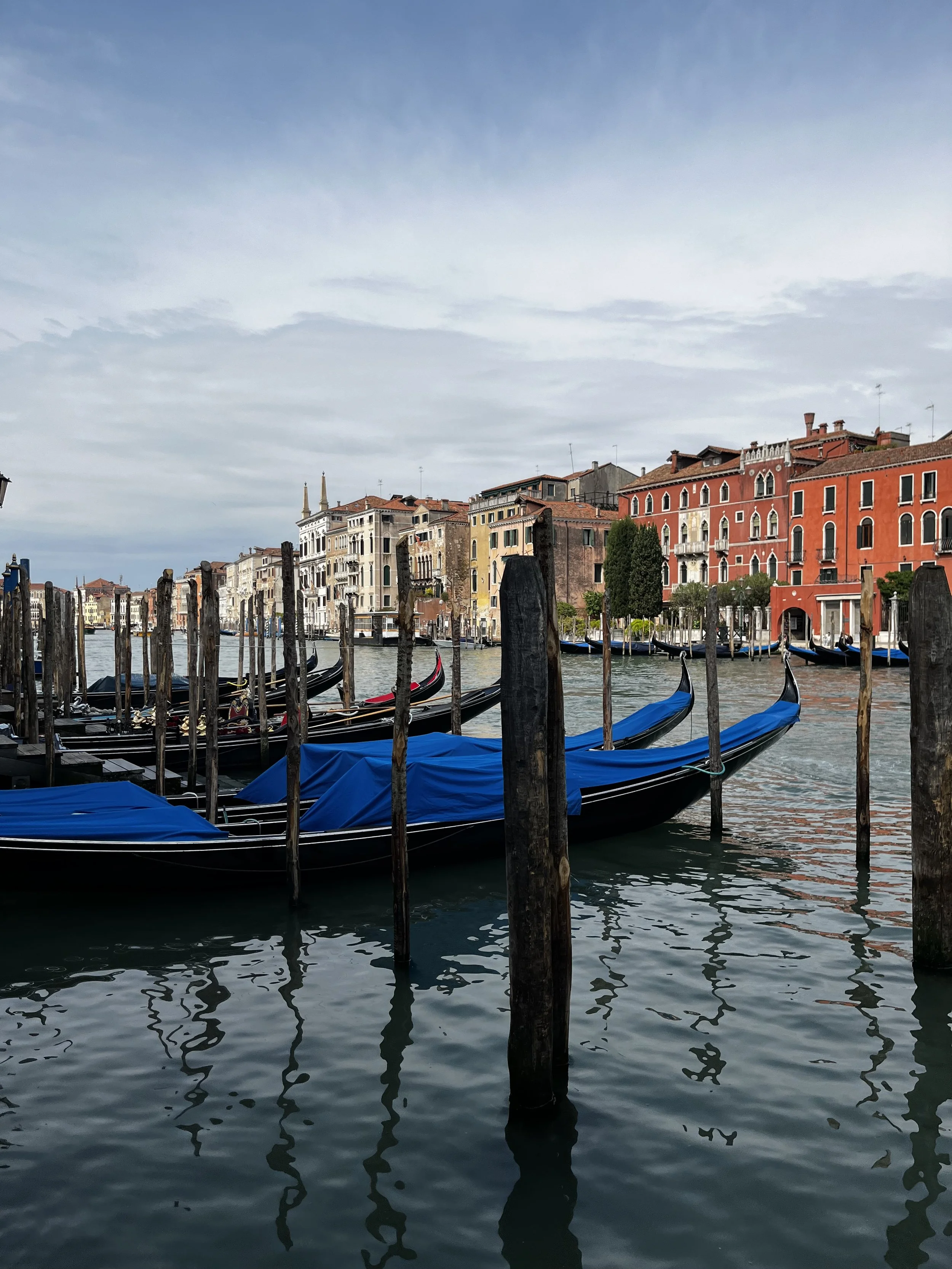
We didn't try to see everything. We didn't race between sights or tick off a list. We walked until we were tired and then we sat somewhere and watched the city move around us, which in Venice is never boring because the city moves on water.
That is the only real advice I have: give it more time than you think you need, start your mornings early, and don't leave without going to the back of the bookstore.
I'll be back. Next time, Cannaregio: longer canal-side walks, better cicchetti bars, fewer people who look like they are in a hurry. The part of Venice that most feels like somewhere people actually live. Probably for longer than four nights.
If You're Going
Where to stay:Hotel Cavalletto e Doge Orseolo (San Marco) for first-timers who want everything walkable. Cannaregio for a quieter, more residential second visit.
Browse Venice hotels on Travelocity.
What to book ahead: The Doge's Palace + St. Mark's Basilica combo is worth doing with a guide. GetYourGuide skip-the-line tour is what we used.
Getting from the airport: From Marco Polo, take the Alilaguna Blue Line water bus into the city. About 75 minutes, and it's the right way to arrive.
Bundles:Expedia has Venice flight + hotel packages if you're booking the trip in one go.
The Practical Notes
Data:aloSIM worked perfectly for me throughout Italy. (Note for anyone on MetroPCS: my husband's phone was paid in full and less than a year old, and they still refused to unlock it for international use. Worth checking before you fly.)
Do not forget: A portable phone charger. I cannot stress this enough.
Timing: Late April was busy. July and August are reportedly much worse (heat + cruise ships). For a slower visit, consider late September through early November.
What to pack: Real walking shoes ( you'll be on stone bridges and cobblestones all day), a crossbody bag with a zip, a scarf for churches and evening canal wind, and a modest layer for the Basilica.
Expedia — Venice flights + hotel bundles
Disclosure: This post contains affiliate links booking through these links supports Life She Loves at no additional cost to you. All opinions and recommendations are my own.
