
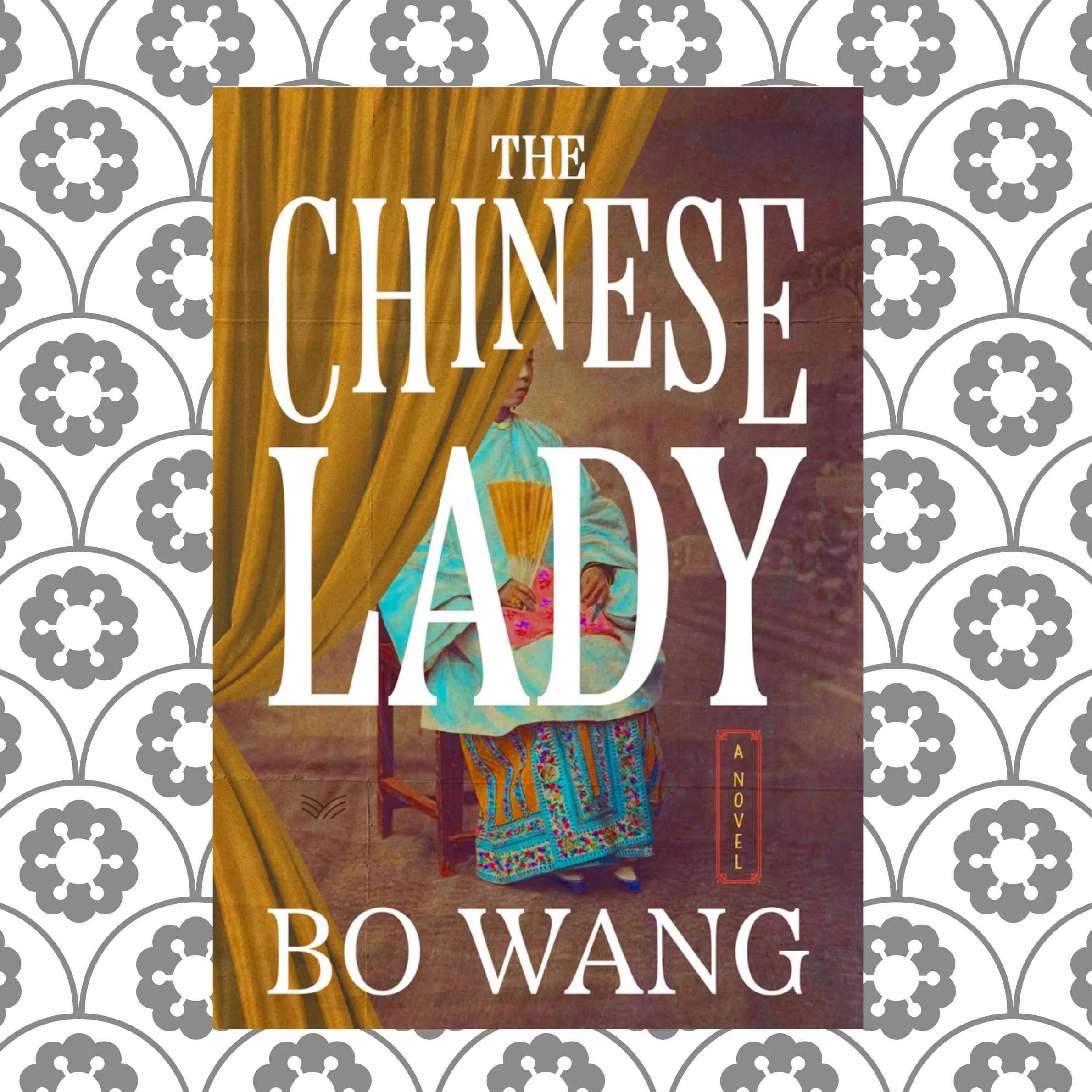
The Chinese Lady
by Bo Wang
This post contains affiliate links. If you purchase through my links, I may earn a commission at no additional cost to you.
ARC Review
HarperVia | September 8, 2026
Going into The Chinese Lady, I knew Afong Moy was a real person, often described as the first Chinese woman to come to the United States. It wasn’t until I read the author’s note that I realized how little of her actual life is documented in the historical record. Bo Wang takes those fragments and imagines the woman around them.
Little Sparrow. Julia. China. Mrs. Moy.
Each name marks a section of the book, told through the voice of one of the women in her life until, finally, we hear from Afong herself.
The names change depending on who is looking at her and what they need her to be. By the time I had seen her move through all of them, I was thinking less about the names themselves and more about how much of her identity had been decided by other people. During so much of her life, she doesn’t really own her own space. Other people decide where she goes, what she is called, what she represents and which parts of her are valuable.
A Very Smart Survivor
Afong is resilient, but that word isn’t really enough. She is a survivor, but she is a very smart survivor.
She learns how to read people and situations, adapts when she needs to and understands when she has choices and when she doesn’t. She is living in circumstances that give her very little power, and Wang never forgets that. She writes Afong as strong within the reality of the life she is living rather than giving her freedoms she simply would not have had.
The History Worked
I already knew some of the history surrounding this period. I knew about Britain’s role in bringing opium into China and the devastation surrounding the Opium Wars. P. T. Barnum and the world of public exhibitions were familiar territory too.
What I knew much less about was how Chinese immigrants fit into the racial history of nineteenth-century America. Wang gives enough historical context to understand that world without letting the history take over the story.
The Chinese Lady is an English-language novel by a Taiwanese American writer looking at early Chinese American history. Diaspora through and through, and it still feels very much at home in My Asian Era. Wang leaves Chinese words in the text here and there without stopping to explain every one of them. I liked that. I never had trouble following the story, and I didn’t need every word or cultural reference explained to me.
Being Recorded Is Not the Same as Being Known
The author’s note changed the way I looked at the story because the historical record can tell us that Afong Moy existed. It can tell us that Americans paid to look at her and record some of the names she was given. It cannot really tell us who she was when those people weren’t looking. Wang uses those fragments to imagine the person the historical record cannot give us.
I started the book knowing Afong Moy had really existed. I finished it with a much better understanding of how little we actually know about her life, but with an idea of how it might have been.
If you like historical fiction that makes you curious enough to go learn more afterward, especially Chinese American history, immigration and women’s lives, this is a good one.
Definitely worth the read.
I received a gifted advance copy of The Chinese Lady from HarperVia. Opinions are my own.
