
Meet the Translator: Shanna Tan
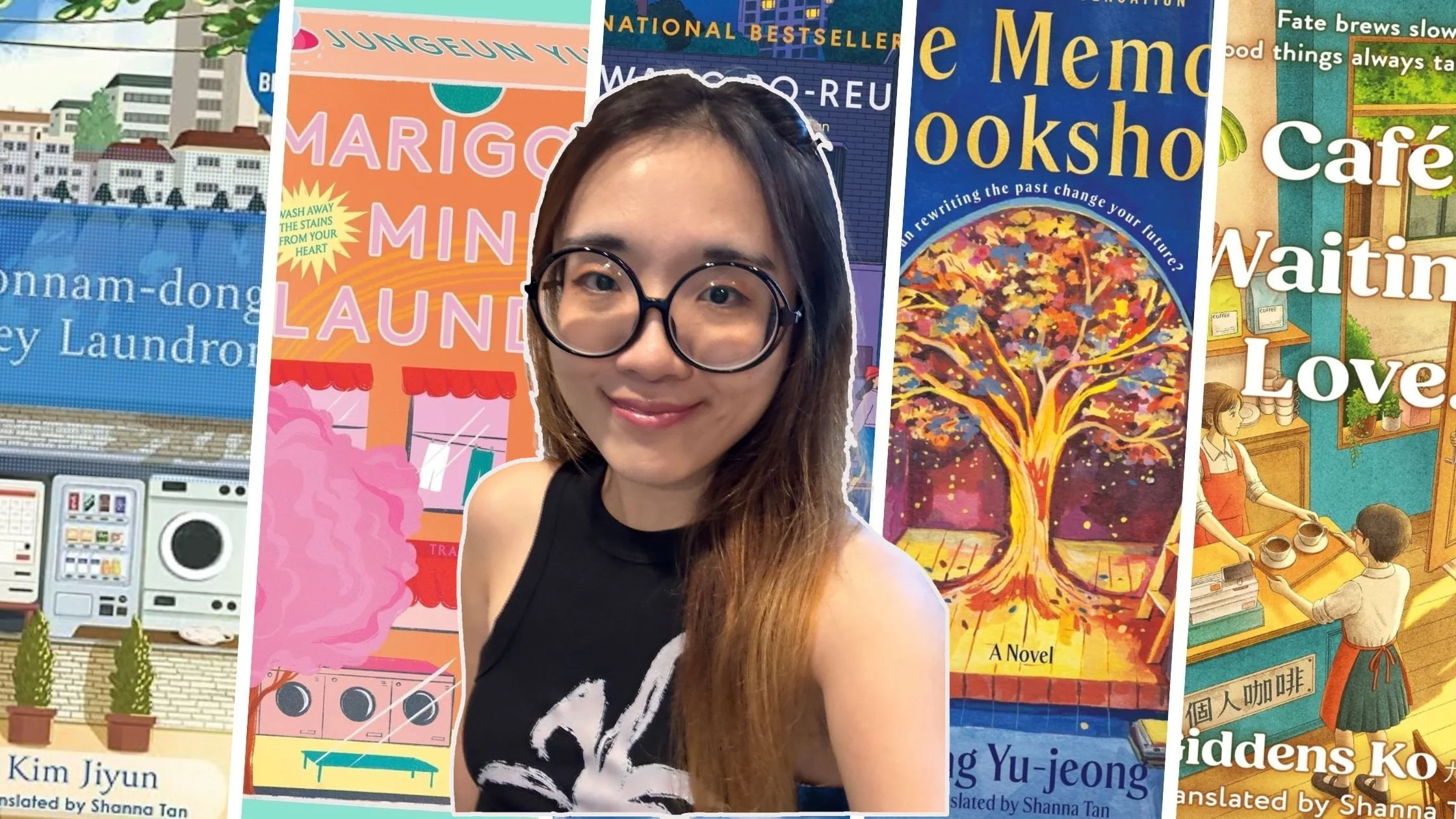
I’ll be honest, I first noticed Shanna Tan because of how active she is on Instagram. This Singaporean translator is always out there talking about the books she has translated, thanking people for reading them, and giving us little glimpses into her life.
Her recent translation, Plant Lady, is on my need-to-read list almost more because of how wholeheartedly she has been out there championing it than because of any of the stellar reviews I’ve read. And there have been many.
I appreciate her work ethic. I appreciate her presence.
With my focus on female translators this month, I started looking at my stacks and realized how many books translated by Shanna I had already read:
Welcome to the Hyunam-dong Bookshop
Marigold Mind Laundry
Yeonnam-dong’s Smiley Laundromat
The Memory Bookshop
Soyangri Book Kitchen
And right now, Café. Waiting. Love.
That’s at least five books translated by Shanna that I’ve finished and a sixth I’m reading now.
I had already been reading Shanna Tan.
I just hadn’t realized how much.
So, who is Shanna Tan?
Shanna Tan was born and raised in Singapore and translates from Korean, Chinese, Japanese and Thai into English. She started teaching herself Korean when she was eighteen.
Years later, Anton Hur’s translation of Kyung-sook Shin’s The Court Dancer changed the direction of her life. Shanna has talked about reading it and realizing how much she loved literary translation. When she saw that Anton was mentoring Korean prose through the National Centre for Writing’s Emerging Translator Mentorship Programme, she applied and was selected for the 2021/22 program.
Anton later introduced her to an editor at Bloomsbury who was interested in a Korean bestseller called Welcome to the Hyunam-dong Bookshop. Shanna prepared a report and translation sample, Bloomsbury acquired the English-language rights, and she was asked to translate the book.
It became her first published book-length translation in 2023.
And then the books started coming.
A conversation with Shanna Tan
For Women in Translation Month, I asked Shanna a few questions about what the work actually looks like from her side of the book.
What’s it like working directly with authors as their translator? How close is that relationship, and has it changed how you approach the work?
“Most readers imagine authors and translators engaging in deep discussions or working closely together, but that’s not true. For me, I prioritise efficiency and also creative freedom, so my authors and I have never discussed my translation. I only reach out to them to clarify details when necessary (e.g. the gender of characters is not clear from Korean pronouns).
Of course, when I have the opportunity to meet these authors in-person during book tours, we develop a closer friendship. 🙂 Kim Jiyun and I had a girl’s date at Yeonnam-dong, which is also the setting of her heartwarming novel Yeonnam-dong’s Smiley Laundromat. We had so much fun chatting and laughing over random things.”
I had absolutely pictured more back and forth between author and translator than that.
Instead, Shanna wants the creative freedom to do the translation. She reaches out when she actually needs clarification, then gets on with the work.
And sometimes the relationship becomes something different later. There is something very sweet about translating Kim Jiyun’s fictional Yeonnam-dong and then eventually sitting together in the real neighborhood talking and laughing.
But Shanna’s answer also made me curious about what happens when it is just her and the book.
How does she actually begin?
Her process has changed as she has translated more books. In a 2024 interview with the Los Angeles Public Library, Shanna explained that she used to feel compelled to read a book from beginning to end before beginning the translation. Now she sometimes enjoys doing that first draft as she reads because it puts her closer to the experience of a reader encountering the book for the first time.
What she is listening for, though, goes far beyond individual words.
Style. Voice. Mood. Feeling.
She makes a distinction in that interview that I keep coming back to: she is a literary translator, not a literal translator.
Languages don’t line up neatly word for word. Her job is to understand what the writing is doing and find a way for it to do that again in English.
That seems obvious once someone says it.
But I’m not sure I really thought about it that way before I started paying attention to translators themselves.
“I’m a literary translator, not a literal translator.” — Shanna Tan
Has being a woman shaped the kind of books you’re drawn to, or how you’re received in the industry?
“Not exactly. I go by gut feeling. Maybe it does play a part, but not consciously. Thankfully, I haven’t experienced an incident where I was slighted for being female.”
I like that she didn’t try to make the answer fit the question.
Maybe being a woman affects the books she chooses. Maybe it doesn’t. It isn’t something she consciously uses to make those decisions.
That’s her answer, and it gets to stay her answer.
What’s one thing about doing this work that surprised you, or that people outside the industry don’t realize?
“I’ve gone through my share of ups and downs, so nothing surprises me anymore. 😅 Maybe one - sometimes I still have to ask to be credited.”
There it is.
Sometimes she still has to ask to be credited.
After everything I had already been thinking about translator credit, that answer hit pretty hard.
And I don’t think I need to build a long argument around it.
She shouldn’t have to ask.
“Sometimes I still have to ask to be credited.”
The more I looked at Shanna’s work, the more interesting it became
Most of the Shanna Tan translations I already knew were Korean fiction.
Bookshops. Laundromats. Healing fiction. Books about people slowing down long enough to rethink what they want from their lives.
But once I started looking at her work as a whole, that version of Shanna became much too small.
She also translates Singaporean Chinese literature.
Shanna has spoken about how underrepresented Singapore Chinese writing remains in English translation and about wanting to help bring the work of Singaporean writer Wong Koi Tet to readers beyond Singapore.
Her translation of Wong’s DAKOTA was published by City Book Room in 2024. The original Chinese-language Dakota won the 2020 Singapore Literature Prize for Creative Nonfiction in Chinese.
Parts of Shanna’s translation had already appeared in The Common, The Southern Review and The Georgia Review before the full English edition was published.
That book particularly interests me because it shows something very different from the Korean novels through which I first became familiar with her work.
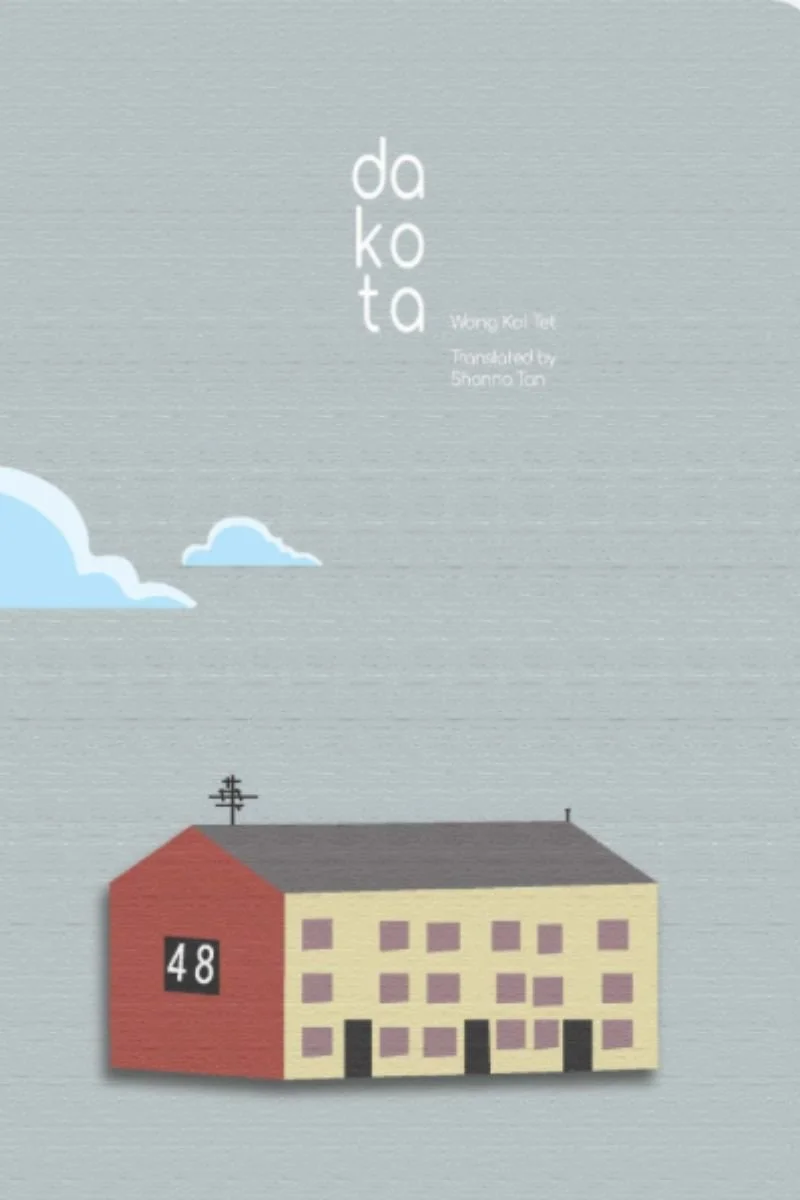
DAKOTA by Wong Koi Tet, translated from Chinese by Shanna Tan.
And then there are the languages.
Café. Waiting. Love. by Giddens Ko is translated from Mandarin Chinese.
A Day for Bread, Soup and Cats by Yoko Mure is translated from Japanese.
Shanna also lists Thai among the languages she works from.
The Shanna Tan books I’ve read so far
At the moment, I know I’ve finished Welcome to the Hyunam-dong Bookshop, Marigold Mind Laundry,Yeonnam-dong’s Smiley Laundromat, The Memory Bookshop and Soyangri Book Kitchen.
I’m currently reading Café. Waiting. Love.
And I’m deliberately saying so far because I still need to compare her complete bibliography with everything I’ve read.
Which is actually a pretty good illustration of how I got here in the first place.
I was paying attention to the books.
Now I’m paying attention to the person translating them too.
Shanna Tan’s translations
Some of the book links below are affiliate links. If you make a purchase through one of these links, I may earn a small commission at no additional cost to you.
This is Shanna’s current book-length bibliography. She has more work coming, so I’ll keep this page updated as new projects are announced.
2026
A Day for Bread, Soup and Cats by Yoko Mure
Translated from Japanese
Orion Books
Café. Waiting. Love. by Giddens Ko
Translated from Mandarin Chinese
Wildfire Books
Plant Lady by Minyoung Kang
Translated from Korean
Doubleday
The Memory Bookshop by Song Yu-jeong
Translated from Korean
Harperfiction
2025
The Moon Glow Bookshop by Dongwon Seo
Translated from Korean
Wildfire
Every Day I Read by Hwang Bo-reum
Translated from Korean
Bloomsbury
Soyangri Book Kitchen by Kim Jee-hye
Translated from Korean
Union Square & Co.
Hakuda Photo Studio by Her Taeyeon
Translated from Korean
John Murray
Every Moment Was You by Ha Tae-Wan
Translated from Korean
Little, Brown Book Group
2024
Marigold Mind Laundry by Jungeun Yun
Translated from Korean
Yeonnam-dong’s Smiley Laundromat by Kim Jiyun
Translated from Korean
DAKOTA by Wong Koi Tet
Translated from Chinese
City Book Room
2023
Welcome to the Hyunam-dong Bookshop by Hwang Bo-reum
Translated from Korean
Bloomsbury
Shanna’s shorter published translation work includes Ci Yun’s Dream Dialogues in Books From Taiwan; several excerpts from Wong Koi Tet’s DAKOTA in The Georgia Review, The Southern Review and The Common; an excerpt from Portraits of Mastery by MovingTaipei in Books From Taiwan; and Hwang Jiun’s “Annyõng, Peter” in Azalea: Journal of Korean Literature & Culture.
And then there’s The Language Bookshop
This may be my favorite thing I learned about Shanna.
She wants to open a bookstore.
Not just any bookstore.
She already knows what she would call it: The Language Bookshop.
Her idea is a multilingual bookstore carrying fiction in the languages of Asia, translated literature and language-learning books. She imagines multilingual readings and translation workshops too.
It makes complete sense.
Someone who has built a life around moving between languages wants to create a physical place where those languages can sit beside each other.
Shanna, if you ever open it, I’m coming.
Until then, I’ll keep looking for your name on the next book.
Name the Translator
This profile is part of my ongoing series looking more closely at the translators behind the books I read. It began with Taiwan Travelogue and the Booker Prize acceptance speech that made me start paying much closer attention to translator credit.
